
- +1
这个世界就是一堆奇观 | 王庆松个展
 这个世界就是一堆奇观
摄影让对象转变为图像。摄影本来就具有这样的媒介性质。同时,通过摆拍,通过对景观的再造,图像成为地道的视觉表达,图像也从所谓的纪实中获得了自身的独立,而与现实相互对峙。这里存在着一种分裂,我或可称之为图像与摄影的分裂。图像不再是对一个人为景观的纪实,图像成为一种视觉的回溯,貌似客观,实则反客观。同样,摄影不再是摄影,所有曾经附着于摄影这一媒介的解释,在虚构的图像面前被瓦解掉了,摄影因之而成为地道的表达。
——楊小彥
 展览
展览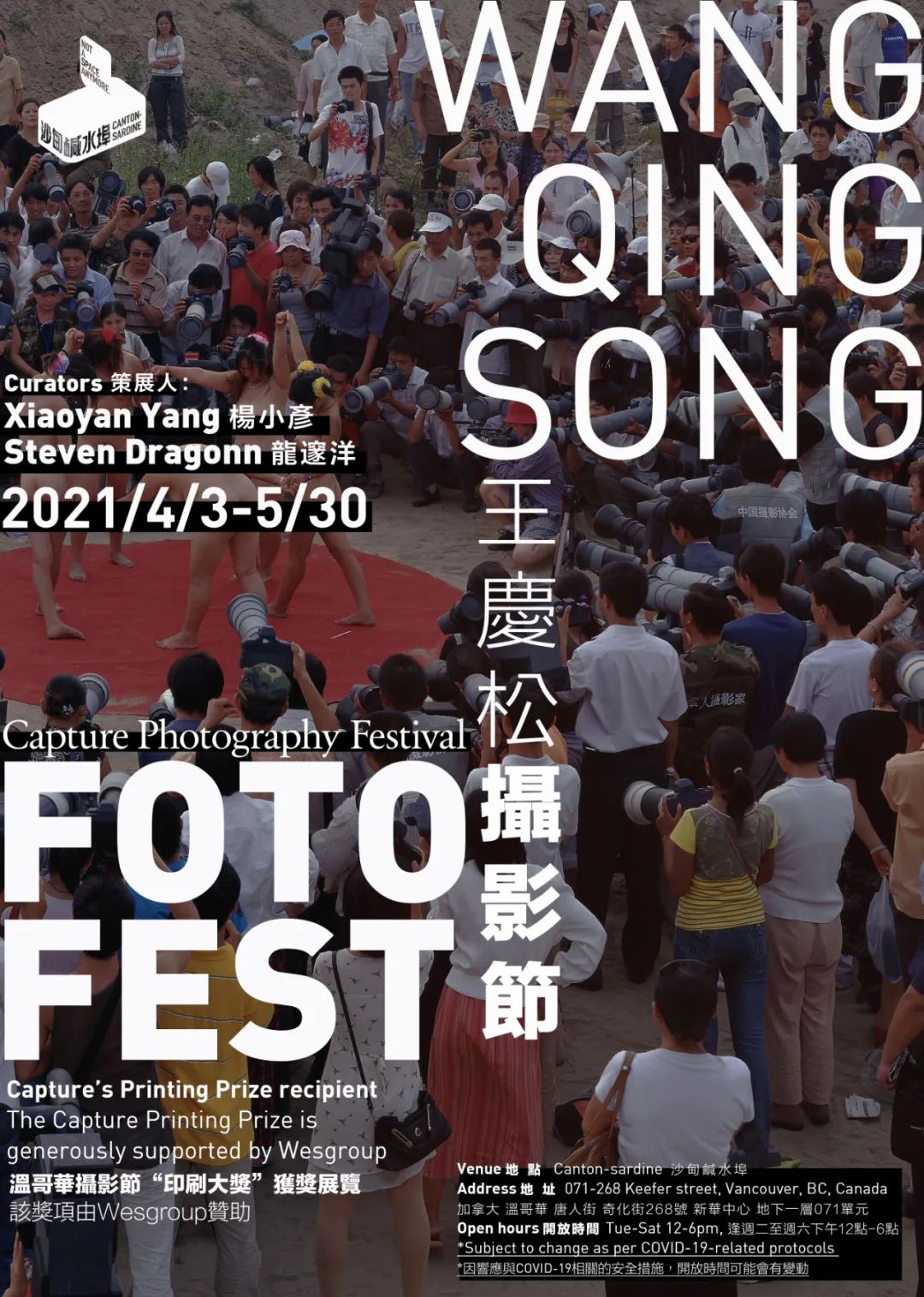 王庆松: 摄影节
藝術家:王庆松
策展人:楊小彥,龍邃洋
展覽時間:Apr 3 – May 30, 2021
地點:沙甸鹹水埠
地址:溫哥華 唐人街奇化街268號新華中心
地下一層071單元
開放時間: TU–SA, 12–6 PM; M, SU CLOSED
謹請在沙甸鹹水阜網站預約觀展
www.canton-sardine.com
(该展荣获温哥华摄影节首届印刷大奖)
 这个世界就是一堆奇观
——关于王庆松的图像叙事逻辑
杨小彦
王庆松创作于2005年的《摄影节》,描述的是一个摄影艺术创作的典型场景:一群人手持相机,围着几个裸体模特在拍照。
这是一个让人难忘却又难以言喻的视觉奇观。
公开的女性裸体呈现,在任何社会、任何历史阶段,都是一件有违公共道德的事件,都构成某种程度的观看禁忌。但是,如果这是审美呢?
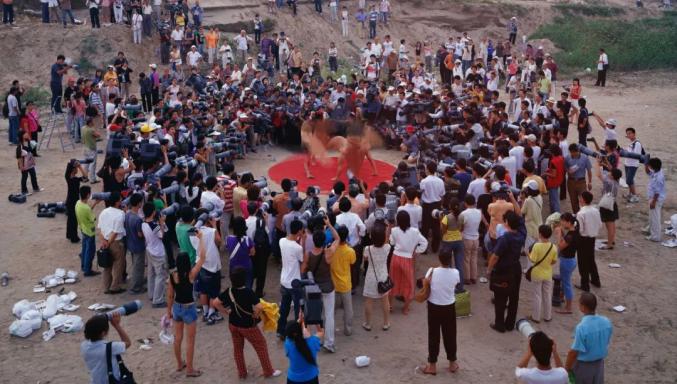 ▲《摄影节》王庆松,c-print, 2005, 艺术家提供
据说,摄影是艺术。所以,透过镜头观看,就顺理成章地成为了正当的审美。以摄影的名义去窥视,不仅不是问题,还具有了美学的合法性。也不知从什么时候开始,中国社会就出现了这样的公开观看,几个年轻女模特在骚首弄姿,一群摄影家围着她们疯狂地拍照。稍微注意一下那些拍摄群体,无一例外都是中老年人,每人长枪短炮,忙得呼吸急促。
在西方,人体艺术始终包含着对于色情这一概念的历史性判断。在这一情境中,“色情”显然不是一个贬义词,它是对某种客观状态的描述用语而已。当然,历史上被观看的多是女性,背后肯定是男权意识在起作用。不过,曾经是绝对男权的中国传统社会,人体观看却始终是道德禁忌,这是显而易见的事实。大概因为有这样一个强大的背景,所以,西方艺术进入中国,其中对于人体的描绘,尤其是女人体,尽管有正当的理由,但在很长时间里,直到今天,居然是一个严重的问题。女人体无辜,不断化身为“反动思想”的肉身载体,从而让女性为此蒙羞不已。因此,一旦审美得到公开的支持,对着女人体围观拍照就成为让人匪夷所思的公共景观。以艺术之名把色情偷窥上升为审美盯视,让一种装腔作势的风格在图像世界中放肆地漫延。
王庆松把这一奇观命名为“摄影节”。貌似客观的描述,内里却是刻薄的隐喻。
从这一点看,把王庆松定义为图像艺术家是合适的。对于他来说,摄影本身既是媒介也是表达。媒介的意思是,其公认的纪实功能得以让现场拍照具有一种不容置疑的客观性。大众早已习惯了摄影这一由来已久的特性。在他们看来,摄影不就是对事实的一种无差别的留痕吗?摄影的力量也正体现在这一点上。但这似乎也证明了,没有对象就不会有摄影,摄影因对象而存在。但是,设想一下,如果没有摄影,对象无法转变为图像而存留。不能存留,没有了图像,对象还有意义吗?所以,尽管对象让摄影成为摄影,但摄影却改变了对象的性质,使之成为图像,从而如此这般地去书写历史,一部看得见的图像的历史。所以,与其说没有对象就没有摄影,不如说,没有摄影就没有对象。在这一点上,对象等于图像,或者说,对象就是图像。图像是媒介,摄影则是使媒介成为媒介的必然手段,是对象/图像之所以产生意义的、因而是更基础的媒介。
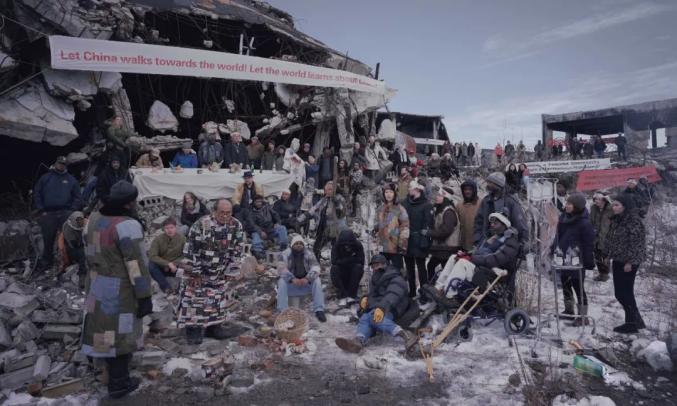 ▲《血衣》王庆松,c-print, 2018, 艺术家提供
但摄影又是一种表达。比如,写实之于绘画是一种风格。通过绘画而获得的写实效果,怎么都无法和摄影的纪实功能相抗衡。因此,面对摄影,面对写实,绘画一定要强调其艺术性,强调画家心灵的作用,以及经由手上功夫而达成的表现。在人们以为摄影等于纪实的年代,摄影的自主性始终无法建立,因为面对绘画的风格,摄影家简直就无地自容。这是摄影的先天问题。而摄影自我拯救的策略是,把纪实和真实划等号,强调摄影的真实性一向为绘画所缺失。摄影以为凭籍这一点可以绕过美学的陷阱,幻想着与绘画等量齐观。所以摄影界才出现所谓抓拍真实还是摆拍真实的奇怪争论,偏激者强调摄影的抓拍性质,否定一切性质的摆拍。殊不知摄影只是让对象等同于图像,却没有让摄影等同于事件。一旦重组事件,一旦把主体变成导演,把摄影的纪实性理解为一种偏向,一种表达,摄影的主体性才得以证明。
摄影让对象转变为图像。摄影本来就具有这样的媒介性质。同时,通过摆拍,通过对景观的再造,图像成为地道的视觉表达,图像也从所谓的纪实中获得了自身的独立,而与现实相互对峙。这里存在着一种分裂,我或可称之为图像与摄影的分裂。图像不再是对一个人为景观的纪实,图像成为一种视觉的回溯,貌似客观,实则反客观。同样,摄影不再是摄影,所有曾经附着于摄影这一媒介的解释,在虚构的图像面前被瓦解掉了,摄影因之而成为地道的表达。
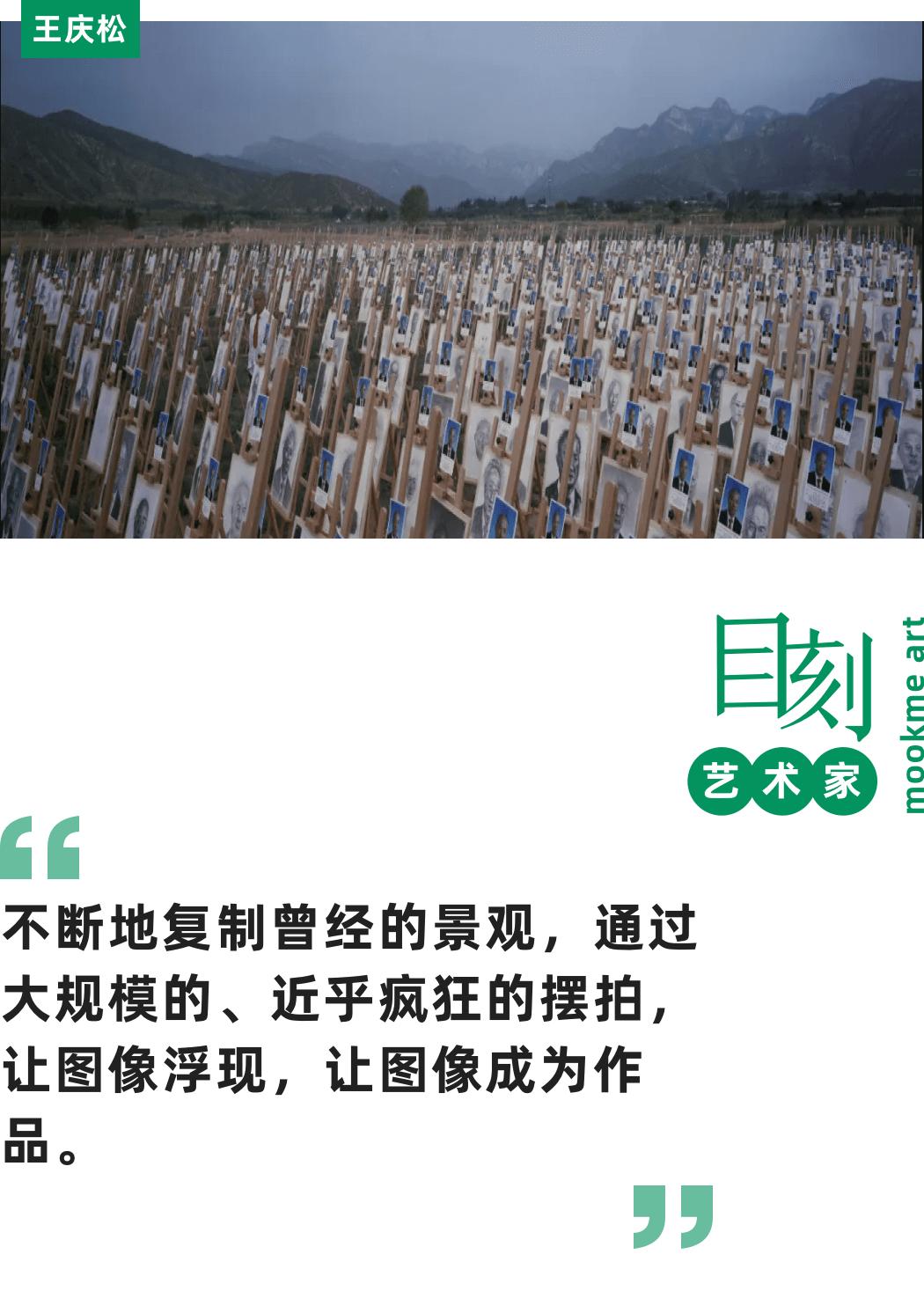
图像的意义正体现在这一分裂当中。王庆松不断地复制曾经的景观,通过大规模的、近乎疯狂的摆拍,让图像浮现,让图像成为作品。他不是在复制曾经的景观,如果那样去理解,就无法诉说王庆松那一份独有的无边从容的无穷焦虑。在他看来,这个世界就是一堆奇观。不仅这个世界是一堆奇观,历史也是一堆奇观。世界与历史合为一体,就是奇观的集合。王庆松之所以持续地工作,他的目标,我想,大概是想建立一个与这一堆奇观相对应的存在。他要制造一个无法定义的存在,这一存在的形式是图像。
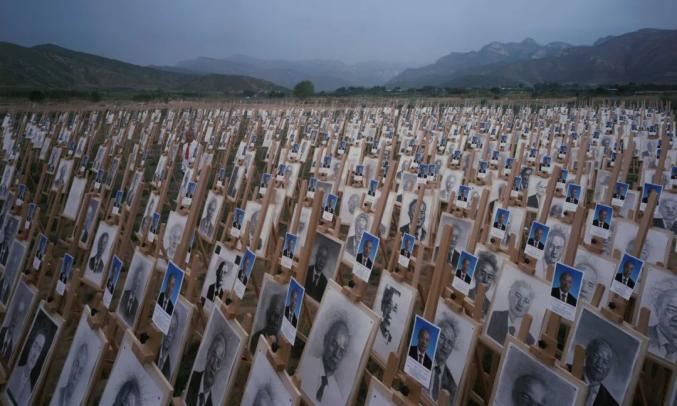 ▲《在希望的田野上》王庆松,c-print, 2018, 艺术家提供
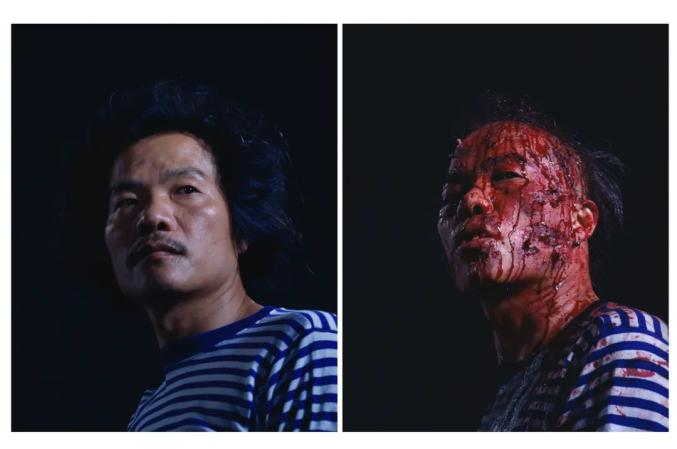 《铁人》王庆松,c-print, 2008, 艺术家提供
《摄影节》多么的分裂。他的每一件作品都被这分裂所包裹,所肢解。从创作于2000年的《老栗夜宴图》,到2020年的新作《在希望的田野上》,我们从中理解到了关于专门针对奇观的反讽。
王庆松达到目的了吗?他的另一件作品《铁人》可能是对这一提问的自我评价,甚或是一个预言,从容却又血淋淋。看来,答案已经在观者心中。
2021年3月30日长沙-武汉-广州途中,草成
 艺术家简介
艺术家简介王庆松
毕业于四川美术学院,1993年至今生活工作在北京,于1996年开始影像创作。在国内外诸多美术馆和画廊举办过40多个个展,参加过光州双年展、台北双年展、悉尼双年展、上海双年展、威尼斯双年展、伊斯坦布尔双年展、基辅双年展等多个国际双年展。2019在武汉合美术馆及韩国首尔摄影美术馆举办个展。2006年获得Outreach Award in Renocontres de le Photographie,法国阿尔勒杰出摄影奖。曾组织策划长江国际影像双年展及成都“金熊猫摄影艺术奖”等展览,现担任成都当代影像馆艺术总监。
他的作品被美国纽约国际摄影中心、纽约现代美术馆、盖蒂美术馆、旧金山现代美术馆、澳大利亚昆士兰美术馆、日本森美术馆、水户当代美术馆、巴西国家美术馆、法国巴黎欧洲摄影中心、奥地利MUMOK美术馆、澳大利亚维多利亚国家美术馆、英国维多利亚阿尔伯特美术馆、韩国大邱美术馆、中国中央美术学院美术馆、广东美术馆、湖北美术馆等60多家公立美术馆收藏。
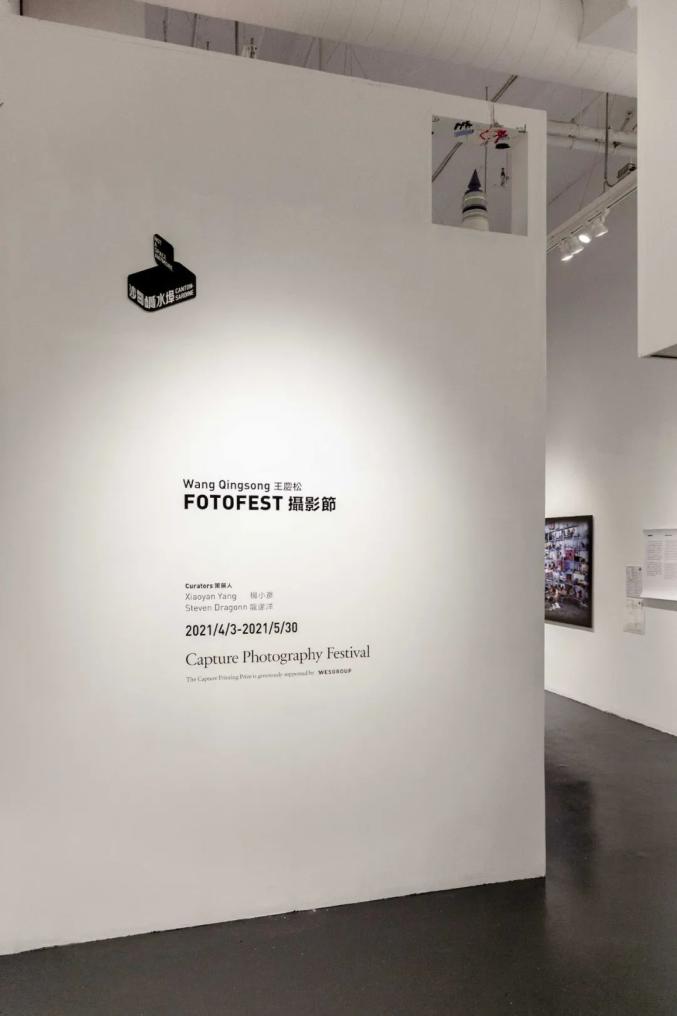
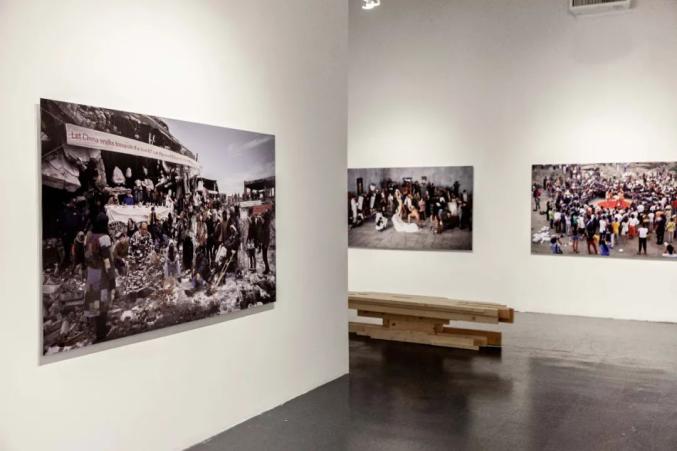
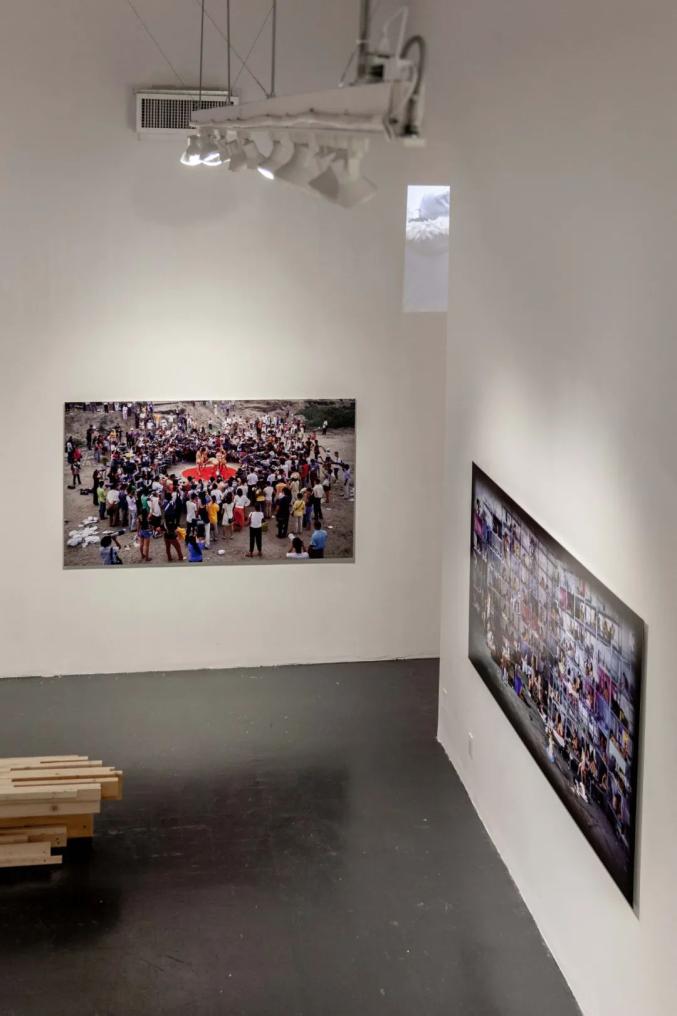
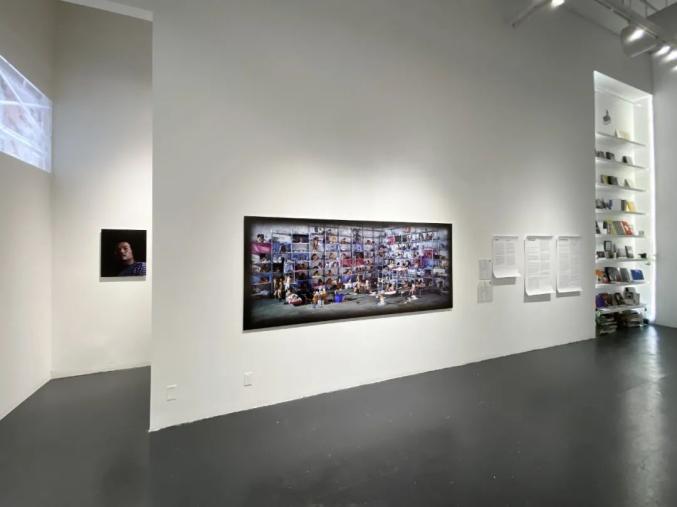
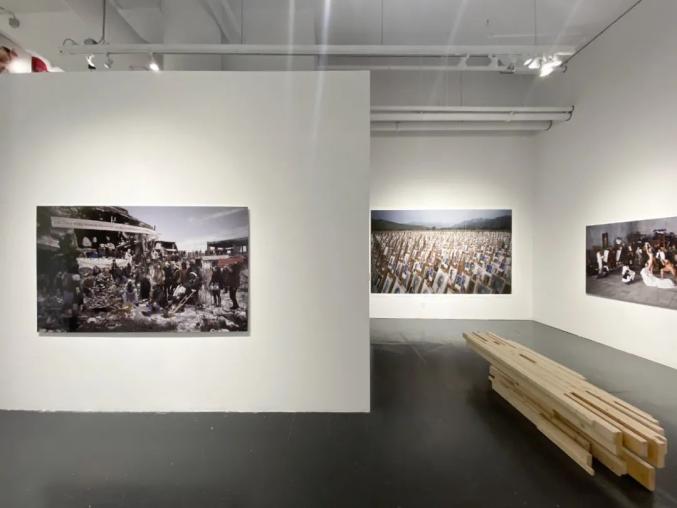
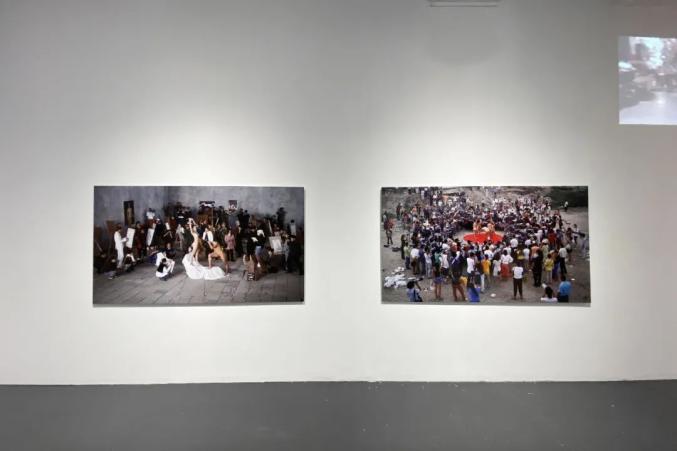
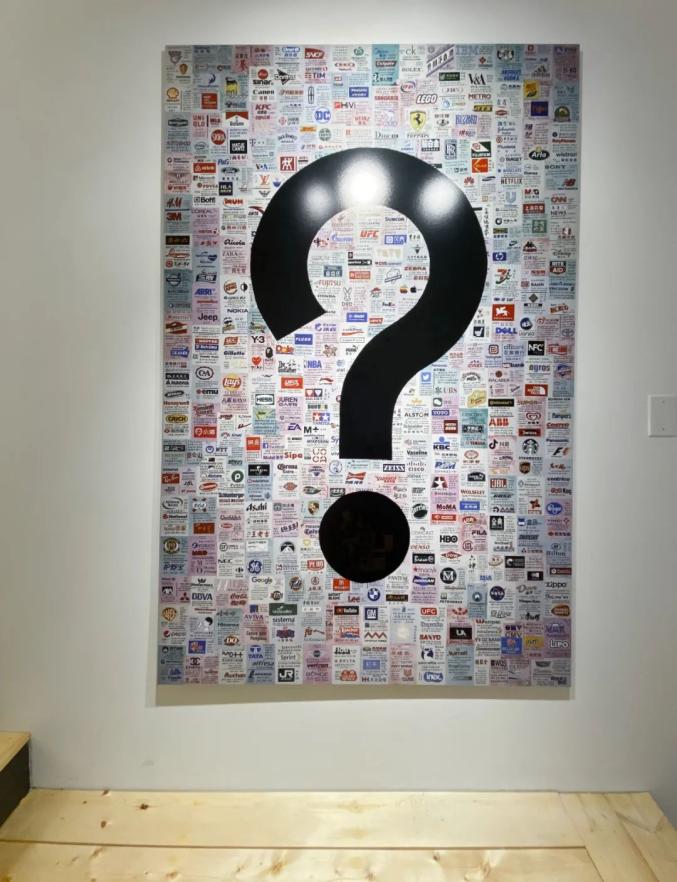
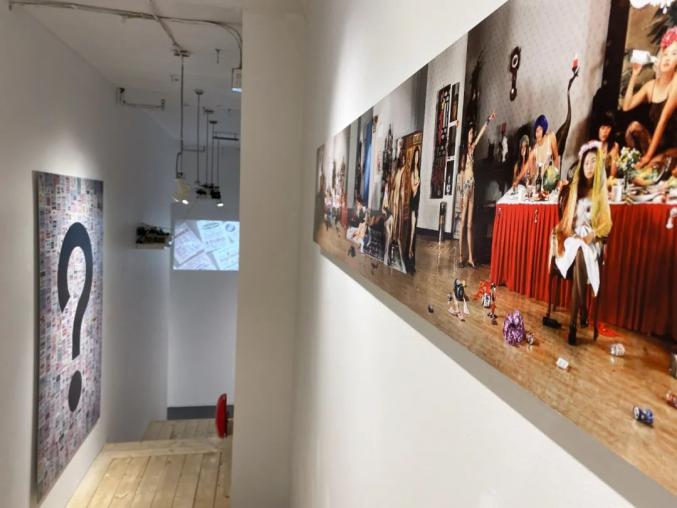
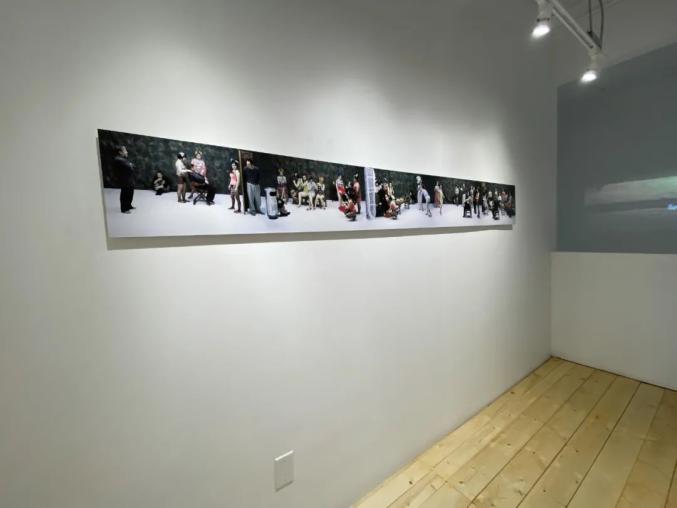
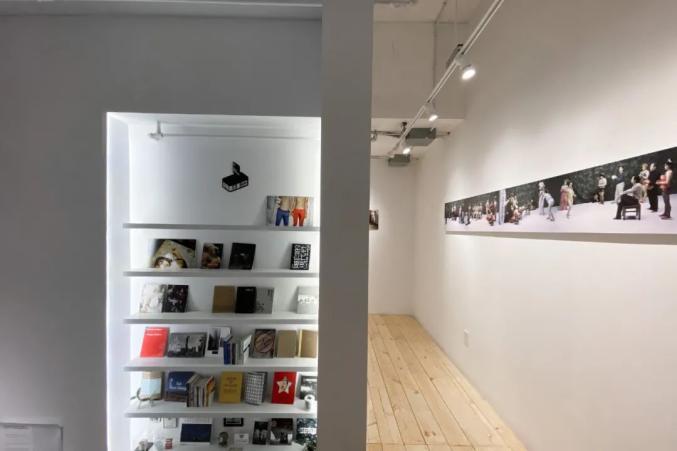
 展览现场
展览现场- 由沙甸咸水阜提供 -
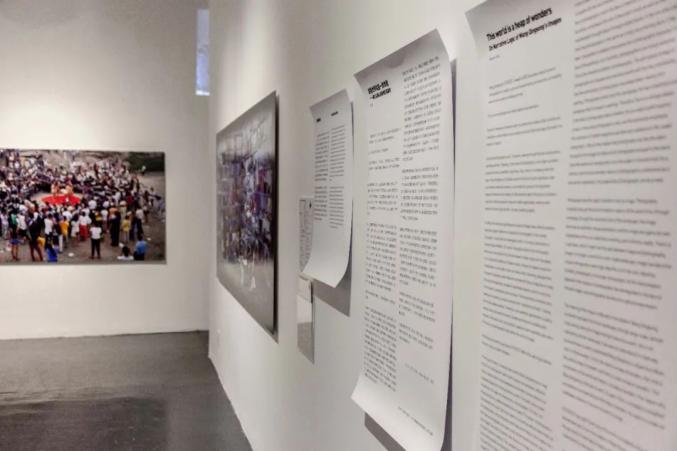
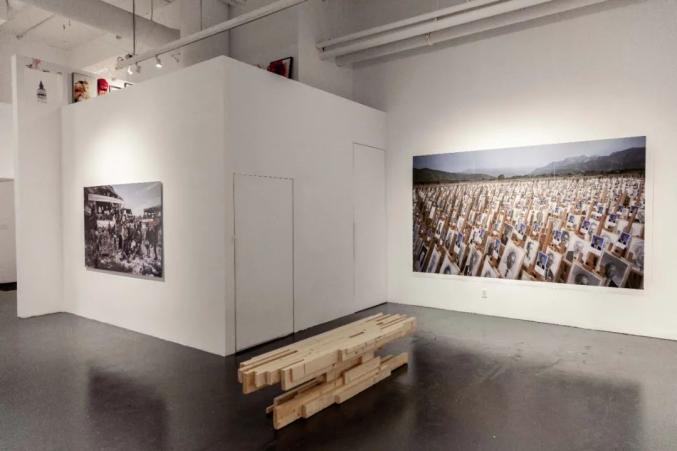
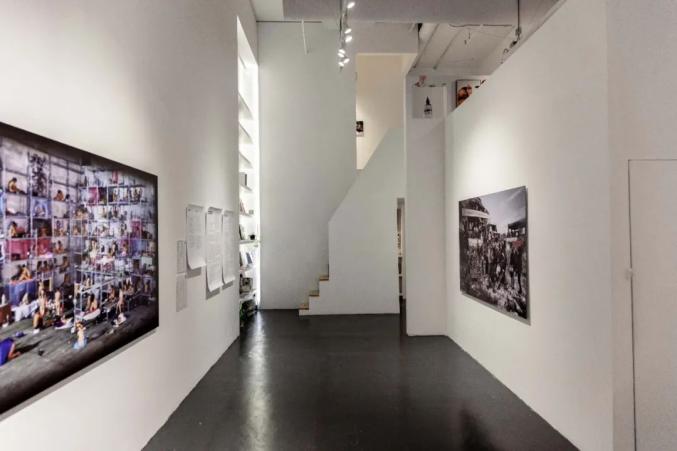
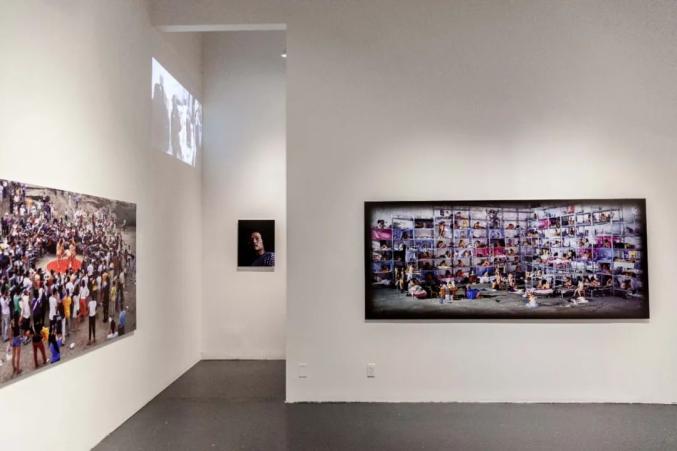
 作者/ 王庆松个展的策展人
杨小彦教授,是中国著名艺术史学家、批评家、策展人,中山大学传播与设计学院教授兼博士生导师,广州美术学院、中国美术学院、四川美术学院、西安美术学院等国内顶尖艺术专业院校的客座教授, 同时兼任西安美术学院博士生导师,第十三届中国美术批评家年会轮值主席,也是国内多家顶级大型美术馆如:清华美术学院美术馆、北京今日美术馆、广东美术馆的资深艺术顾问。
This world is a heap of wonders.
On Narrative Logic of Wang Qingsong's Images
Xiaoyan Yang
Wang Qingsong's FOTOFEST, created in 2005, describes a typical scene of photographic art creation: a group of people holding cameras who, surrounding several nude models, are taking pictures.
This is an unforgettable and indescribable visual spectacle.
The public revealing of female nudity is an event that violates public morality and constitutes a certain taboo in any society and at any historical stage. But what if it is aesthetic in nature?
It is said that photography is art. Therefore, viewing through the lens has become a legitimate aesthetic. Peeping, in the name of photography, is no longer a problem, and also becomes an aesthetic legitimacy. Also, there s no knowing when this began—the emergence in Chinese society of this kind of pubic spectacle; a few young female models are teasing, surrounded by a group of photographers engaged in frenzied picture-taking. A little attention paid to that group of shooters reveals that, without exception, they are middle-aged people, everyone with telephoto and wide angle barrels--hurried, breathing rapidly.
In the West, the historical significance of nude art images have, without exception, always been judged relative to conceptions of pornography. In this context, "pornography" is obviously not a derogatory term, it is simply a description of an objective state of affairs. Of course, throughout history most of the people watched are women; behind this fact the power of male chauvinism has played a role. In patriarchal traditional Chinese society, viewing the naked human form has always been a moral taboo; this is an obvious fact. Generally, because there is this powerful backdrop, when Western art entered China, its depiction of nudity, particularly the female body, despite its legitimate reasons, has for a long time, up to the present, constituted a serious issue. The female body is innocent, yet is ceaselessly incarnated as a body burdened with "reactionary thought," causing women to feel endless shame. Therefore, once aesthetic appreciation is publicly supported, taking pictures of women's bodies becomes an incredible public landscape. In the name of art, pornographic peeping rises to aesthetic gaze, and a kind of posturing style spreads freely within the world of images.
Wang Qingsong named this spectacle FOTOFEST. Within this seemingly objective description there is a harsh metaphor.
From this point of view, it is appropriate to define Wang Qingsong as an image artist. For him, photography itself is both medium and expression. What the medium means is that its acknowledged documentary function allows for an unassailable objectivity in photographing a scene. The public has long been accustomed to this age-old characteristic of photography. For them, isn't photography just an undifferentiated trace of reality? The power of photography is also reflected in this point. But it also seems to prove that without objects there can be no photography, and photography exists because of objects. But imagine that, if there was no photography, the object could not be transformed into, and preserved as an image. If we cannot preserve, then there is no image, so in that case does the object have any meaning? Thus, always the object permits photography to become photography; yet photography changes the nature of the object, causing it to become an image; thus, in this way, is written a history, a history in visible images. Therefore, it is not so much that there is no photography without objects as that there is no object without photography. At this point, the object is equal to the image, or the object is the image. Image is a medium; photography is the inevitable means to make the media become a medium; it is a meaningful object/image, consequently, it is a more fundamental media.
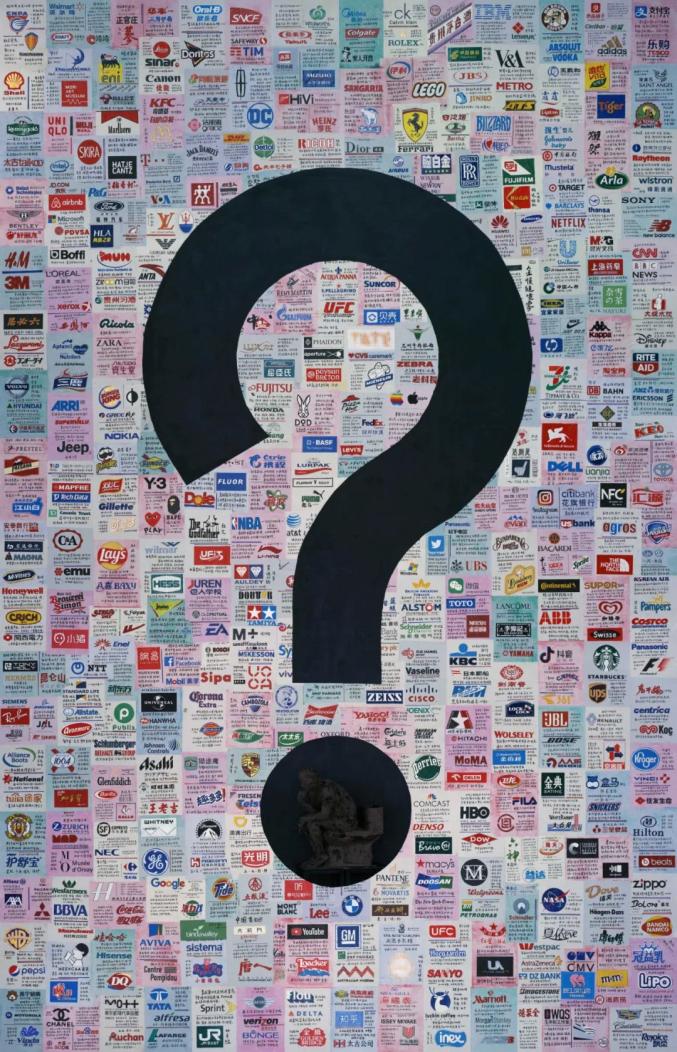 ▲《问他》王庆松,c-print, 2020, 艺术家提供
But photography is also a kind of expression. For example, realism is a style of painting. The realistic effect obtained through painting cannot compete with the documentary function of photography. Therefore, in the face of photography, and in the face of realism, painting must emphasize its artistry, emphasize the role of the artist's mind, as well as the manifestation brought about through skilled hands. In the era when people think that photography is the same as simply documenting facts, it has been impossible to establish the autonomy of photography because, in the face of the painting’s air of artistry, photographers are simply ashamed. This is the inherent problem of photography. The self-saving strategy of photography is to equate documenting events with the real, emphasizing that the authenticity of photography has always been missing from painting. Photography thinks that this can bypass the trap of aesthetics and fantasizes that it is equal to painting. Therefore, there is a strange debate in the field of photography about whether the so-called candid snapshot is real, or the posed photograph is real, and the extremists emphasize the substance of candid snapshots and deny any substance to the posed photograph. Little do they realize that photography only lets the object be equal to the image but does not let photography be equal to the event. Once the events are reorganized, once the subject is transformed into a director, and the documentary nature of photography is understood as a bias and an expression, the subjectivity of photography can be proved.
Photography lets the object transform into an image. Photography originally has just this kind of medium-nature. At the same time, through arranging, through the reconstruction of the landscape, the image becomes an authentic visual expression, and the image also gains its own independence from so-called documenting, and confronts reality. There is a split here, which I might call the split between image and photography. Image is no longer a record of a man-made landscape; image has become a visual retrospective, seemingly objective, but in fact anti-objective. Similarly, photography is no longer photography. All the interpretation attached to the medium of photography has disintegrated in the face of fictional images, and photography has become a genuine expression.
The meaning of the image is reflected in this division. Wang Qingsong constantly replicates the former landscape, through large-scale, almost crazy posing, letting the image emerge to become a work. He is not replicating a former landscape; if we were to understand it in that way, we would have no way to understand Wang Qingsong’s unique boundless calm’s infinite anxiety. To him, the world is a heap of wonders. Not only is this world a heap of wonders, but history is also a heap of wonders. The combination of the world and history is a heap of wonders. The reason why Wang Qingsong continues to work, his goal, I think, is probably to establish an existence corresponding to this heap of wonders. He wants to create an indefinable existence, the form of which is image.
FOTOFEST how split? Every one of his works is wrapped in this split, by dismemberment. From the creation of Night Revels of Lao Li in 2000 to the new work On the Field of Hope in 2020, we can, from these works, understand the extraordinary satire of such astonishing spectacle.
Did Wang Qingsong achieve his goal? Another of his works, Iron Man, may be a self-assessment of this question, or even a prophecy. The answer lies in the mind of the viewer.
Rapidly completed on the way from Wuhan to Changsha to Guangzhou, China
On March 30, 2021
 關 於 我 們
在1958年巴黎的Iris Clert畫廊,法國前衛藝術運動藝術家伊夫·克萊因(Yves Klein)將整間畫廊的展廳騰空,譲觀眾掀開入口的藍色帷幕進入空無一物的展廳。克萊因原意是為觀眾提供一個視覺上完全單色的體驗,然而卻開創性地把被稱作“白立方”的空間變成了展覽的主體。兩年後的1960年,另一位新現實主義代表人物阿爾曼(Arman)用廢棄物品將同一畫廊的全部空間塞滿,前來出席開幕式的觀眾則被迫呆在禁閉的大門與櫥窗之外觀展。而這個展覽的邀請函則是一個被寫滿字蹟的紙張塞滿的沙丁魚罐頭。延至今天,“白立方”一詞已然成為當代藝術中畫廊或者空間的代名詞。然而這並非一個符合目前非盈利藝術家自運營機構的描述。我們希望用“沙丁(Sardine)”一詞代替“空間(Space)”,因為非盈利藝術家自運營機構除展覽外,還肩負策展、出版、藝術家駐地,甚至書店等功能,麻雀雖小五臟俱全,滿滿的內容才是機構的本身。
鹹水埠是廣東人對溫哥華唐人街的舊稱,過去溫哥華唐人街的主要組成就是來自廣東的華人。因此沿用鹹水阜一詞與本機構所在地互相呼應,恰好本機構也是由廣東籍藝術家發起。而“沙丁”一詞也使用廣東話的音譯“沙甸”,與“鹹水埠”組成一個全新的名詞“沙甸鹹水埠”。
沙甸 = 非盈利藝術家自運營機構
鹹水埠 = 溫哥華唐人街
沙甸鹹水埠 = 溫哥華唐人街的非盈利藝術家自運營機構
 About Canton-Sardine
In 1958, inside the Parisian Iris ClertGallery, French avant-garde movement artist Yves Klein emptied an entireexhibition space of an art gallery. Visitors upon lifting the blue curtains atthe entrance, enter an empty exhibition hall. Although Klein’s originalintention was to provide viewers a monochromatic visual experience, hesimultaneously became the pioneer of taking the space known as the “White Cube”as the subject of the exhibition itself. Two years later, in 1960, Arman, adistinctive figure of Neo-Realist art, filled an entire exhibition space of thesame gallery with discarded materials, but visitors were required to view theexhibition outside of closed doors and display windows. The invitation to thisexhibition, titled Full-Up, was asardine can full of handwritten texts. To this day, the term “White Cube” hasbecome synonymous with art galleries and spaces; nevertheless, it is no longeran adequate description for today’s non-profit artist-run centers. We hope toreplace the word “space” with “sardine,” because other than exhibitions, anon-profit artist-run center also carries curatorial and publishing functions,as it can also be a site for artist residencies and bookstores among many otherroles.
This institution is found by Vancouver based artists originally fromCanton, China, hence the name “Canton-sardine.”
 目刻荐书
目刻荐书《今日摄影:1960年以来的影像艺术》
一部内容丰富,轻松易读的当代影像艺术百科全书。
11个主题,从传统语境中的肖像、街拍、彩色与纪实,到新视阈下的摹仿、景观、自我与建构。回顾过去,关照当下,把握未来。
163位艺术家,从安迪·沃霍尔到格拉德·里希特,从辛迪·舍曼到杰夫·沃尔。梳理艺术与摄影的发展脉络。
英国著名艺术出版社Phaidon出品,Art Today(今日艺术)系列扛鼎之作。欧洲摄影畅销书,英文版出版半年即重印。
一部认识当代影像艺术必不可少的参考书,根植于摄影与书籍的关系,梳理影像艺术的发展脉络。
点击关注目刻视频号
原标题:《这个世界就是一堆奇观 | 王庆松个展&温哥华》
本文为澎湃号作者或机构在澎湃新闻上传并发布,仅代表该作者或机构观点,不代表澎湃新闻的观点或立场,澎湃新闻仅提供信息发布平台。申请澎湃号请用电脑访问http://renzheng.thepaper.cn。







- 报料热线: 021-962866
- 报料邮箱: news@thepaper.cn
互联网新闻信息服务许可证:31120170006
增值电信业务经营许可证:沪B2-2017116
© 2014-2026 上海东方报业有限公司