
- +1
CCS Chemistry | Author Spotlight——新加坡国立大学 吴继善教授
以下文章来源于CCSChemistry ,作者CCS Chemistry
 CCSChemistry
CCS Chemistry是由中国化学会创办的高水平旗舰新刊,面向全球科学家,收录化学各领域高质量原创科技论文。关注CCS Chemistry,即时获取期刊相关资讯。
 人物介绍
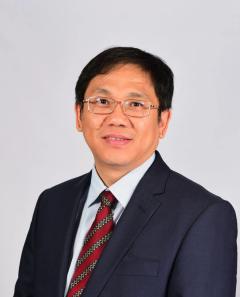
人物介绍Jishan Wu (吴继善)
Prof. Jishan Wu received B.S. degree in chemistry from Wuhan University in 1997, and received his M.S. degree from Changchun Institute of Applied Chemistry, Chinese Academy of Sciences in 2000, under Prof. Xianhong Wang and Prof. Fosong Wang. He was awarded his Ph.D. degree in 2004 from the Max-Planck Institute for Polymer Research (Germany) under Prof. Klaus Müllen. He held a postdoctoral position with Sir Fraser Stoddart at the University of California at Los Angeles from 2005 to 2007 and then joined the Department of Chemistry, National University of Singapore (NUS) as an Assistant Professor in 2007. He was promoted to Full Professor in 2017. His main research interests include novel π-conjugated systems and supramolecular chemistry. In recent years, his group has done intensive work into open-shell singlet diradicaloids, which can be used as next generation molecular materials for electronics, photonics, spintronics and quantum devices. He has received over 20 awards during his independent career, including the Singapore Young Scientist Award (2010), NUS Young Researcher Award (2012), and NRF Investigatorship (2019).
Q1: Who helped you the most as you pursued your research career?
Prof. Wu: I was trained by several renowned scholars in China, Germany, and the USA. Professor Xianhong Wang and Professor Fosong Wang at the Changchun Institute of Applied Chemistry, CAS, introduced me to an interesting research area – the chemistry and materials of -conjugated molecules – and gave me a lot of freedom to explore. I received solid training at the Max-Planck Institute for Polymer Research under the supervision Professor Klaus Müllen, who heavily influenced my career in different ways. Then, I joined Sir Fraser Stoddart’s group, where I enjoyed learning a new research topic – mechanically interlocked molecules and molecular machines. I received a lot of encouragement from Fraser after I started my independent career in Singapore. The people who helped me most after I joined NUS as an Assistant Professor were my collaborators. Over the years, I have established many collaborations with international leading scientists in different areas, including Juan Casado, Kuo-Wei Huang, Dongho Kim, Jun Ding, David Casanova, María Díaz-García, and many others, and we have become good friends. I would like to give special acknowledgement to Prof. Atsuhiro Osuka at Kyoto University who gave me a lot of kind and generous support. He has inspired me in different ways and is my academic hero.
Q2: What are some difficult challenges you have faced during your research career? How did you overcome them?
Prof. Wu: The biggest challenge for me is how to secure enough resources to conduct fundamental research. Nowadays, funding agencies in many countries put more resources to translational research, and there is very narrow space for basic research. I insisted doing my own research and eventually I developed a niche research area. Fortunately, NUS and Singapore recognized my research excellence, and I have received quite good research funding support thus far.
Q3: Who is(are) scientist(s) you most respect or admire? Why?
Prof. Wu: I enjoyed reading old literature, in particular, the papers and books written by some important figures of the area, such as Eric Clar, Franz Sondheimer, Heinz Staab, Fritz Vögtle, and others. It was always an enjoyable to communicate with these wise predecessors through their articles. They inspired me the way of doing excellent research. Of course, I also have highest regards for many outstanding scholars of our current community, such as Lawrence T. Scott, Atsuhiro Osuka, Rik Tykwinski, Harry L. Anderson, Takahashi Kubo, Kenichiro Itami, Hiroshi Shinokubo, in addition to all my supervisors.
Q4: What do you see as the biggest obstacles and most promising applications in your research area?
Prof. Wu: It is difficult to identify all of the applications of our molecules. The most important thing is that we provide deep insight to fundamental structure-electronic property relationship, which is critical for any material application. For the open-shell diradicaloids we are studying, the most promising applications could be spintronics and quantum devices, which require synergetic research from different areas.
Q5: What advice do you have for younger students and researchers beginning their careers in chemistry, and in particular those interested in your field?
Prof. Wu: Do your own research! This is the advice given by Sir Fraser Stoddart, and I would like to say the same to young researchers. Also, do challenging research! It is more meaningful, and it will eventually lead you to high promotion.
Q6: Thank you for publishing your superb work in CCS Chemistry! Could you provide a brief summary of your article and current research direction in a few sentences?
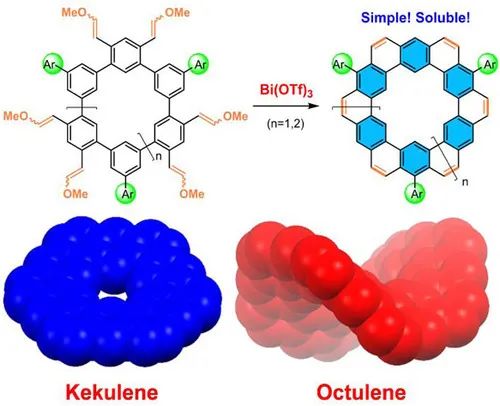
Prof. Wu: This piece of work deals with the challenging synthesis of cycloarenes, a type of polycyclic aromatic hydrocarbons with unique geometry and electronic structure. The first example of this family (kekulene) was reported in 1978, with tedious synthetic procedures. Over the years, there are still no efficient ways to synthesize such kind of molecules. In this work, we developed a facile synthetic method by using Bi(OTf)3 catalyzed cyclization of vinyl ether and solved some long-standing problems. The method has been demonstrated very efficient for other expanded cycloarenes and carbon nanobelts in my group recently (to be published).
Learn more:Wei Fan, Yi Han, Shaoqiang Dong, Guangwu Li, Xuefeng Lu, and Jishan Wu*(吴继善). Facile Synthesis of Aryl-Substituted Cycloarenes via Bismuth(III) Triflate-Catalyzed Cyclization of Vinyl Ethers. CCS Chem. 2020, 2, 1445–1452.
Link: https://doi.org/10.31635/ccschem.020.202000356
 扫描或长按左侧二维码
在线阅读全文
原标题:《CCS Chemistry | Author Spotlight——新加坡国立大学 吴继善教授》
本文为澎湃号作者或机构在澎湃新闻上传并发布,仅代表该作者或机构观点,不代表澎湃新闻的观点或立场,澎湃新闻仅提供信息发布平台。申请澎湃号请用电脑访问http://renzheng.thepaper.cn。







- 报料热线: 021-962866
- 报料邮箱: news@thepaper.cn
互联网新闻信息服务许可证:31120170006
增值电信业务经营许可证:沪B2-2017116
© 2014-2026 上海东方报业有限公司