
- +1
视听山东·听烟台|Jiaodong Big Drum Song to the Beat of Li…
出品/烟台广播
You can have a glimpse of how ordinary but attractive drums are from Big Crabs, A Gluttonous Wife, and Stealing Rice Cakes. Trivialities in life and pains in farm work can also be expressed with humor. Drums fast and slow at times accompanied by the changing rhythms of the three-stringed plucked instrument turn out to be most soothing despite that they only reflect some real but monotonous trifles in life.
鼓声有多平凡动人,可以从《大螃蟹》《馋老婆》《偷年糕》中体会二三。生活琐碎、农忙辛劳,都被风趣幽默地唱出来。敲击声时疏时密,配合着三弦的起承转合,明明只是一些真实又无聊的生活小事,却最能抚慰人心。
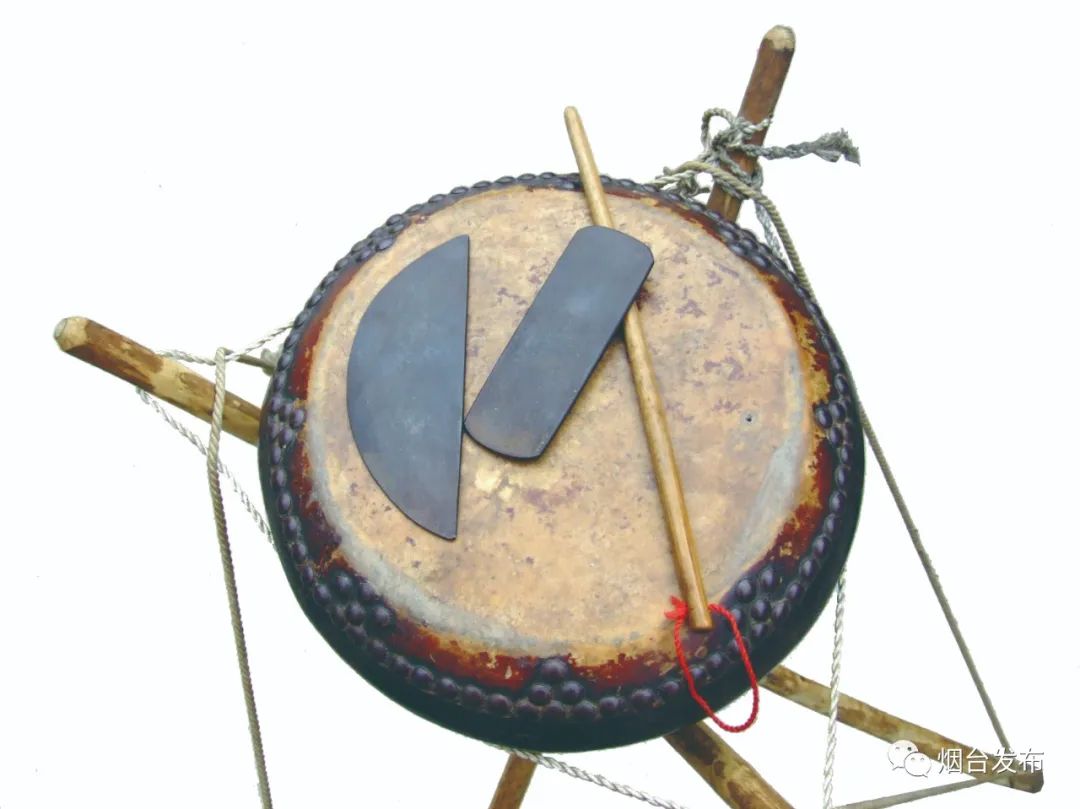 Touching and sonorous, it is why Jiaodong drum songs are charming. Lu You, a poet in the Southern Song Dynasty, wrote in A Close Trip to a Village by Boat: “In Zhaojia Village by an ancient road in the sunset, a sightless man is performing.” The sightless man was thus regarded as the earliest prototype of the performers of Jiaodong Big Drum Song. According to accurate records, Jiaodong Big Drum Song has a history of over 250 years, which can be dated back to the appearance of Liu Xueyi, the earliest performer who performed the tune of the sightless in the first year of the reign of Qianlong. In 2006 Jiaodong Big Drum Song was successfully listed among the first group of the representative projects of national cultural heritages.
声声入心,句句铿锵,胶东大鼓的魅力就在于此。南宋诗人陆游在《小舟近游村》中写道:“斜阳古道赵家村,负鼓盲翁正作场。”“负鼓盲翁”便被认为是胶东大鼓说唱艺人的最早雏形。按照准确记载,从最早演唱盲人调的艺人、乾隆初年的刘学义出现时推算,胶东大鼓至今已有二百五十多年历史。2006年,胶东大鼓成功申报为首批国家级非物质文化遗产代表性项目。
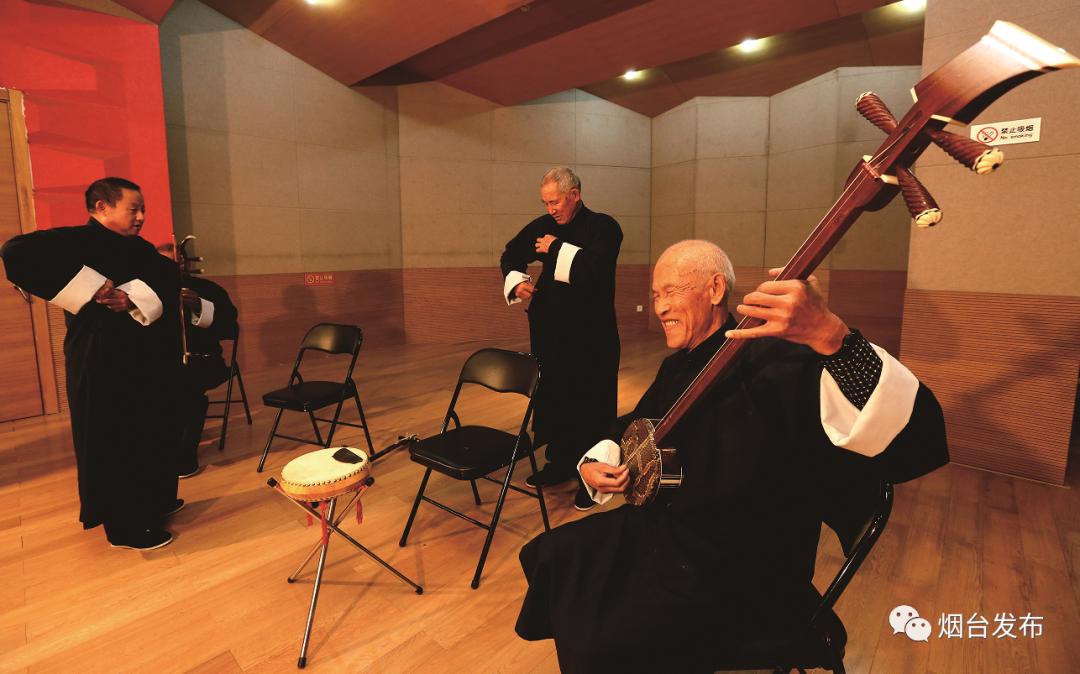 摄影/苗伟
摄影/苗伟Originally in the tune of the sightless, Jiaodong Big Drum Song is commonly known as the “Sightless Tune.” The early tune of the sightless was composed of some simple farmers’ melodies. Afterwards, it was called the Big Drum Song or the Drum Telling. It did not have a real name. Instead, it was named by the place where it was spread, for instance, Laiyang Big Drum Song and Rushan Big Drum Song. As time went by, exchanges were made in different places. When it came to the reign of Kangxi, Kaoshan Tune and Manchurian Dance Opera in the Northeast and the Drum Song of Peking in Beijing and Tianjin all spread in Jiaodong. Zhuiqin, dulcimer, two-string Chinese violin and banhu fiddle often used for operas were also added as musical instruments. It was not generally called Jiaodong Big Drum Song until 1949.
胶东大鼓,最早为盲人调,俗称“瞎腔”。初期的盲人调只是由一些简单的农家小曲组成。之后被称为“大鼓”“鼓书”,长时间并无真正的名称,流传到哪里就以哪里的地名命名,比如“莱阳大鼓”“乳山大鼓”。随着时代的发展,各地交流不断,到了康熙年间,东北的“靠山调”“满洲转”以及京津的京韵大鼓等都传入了胶东。乐器也增加了一些戏曲多用的坠琴、洋琴、二胡、板胡等。直到1949年,才统称为胶东大鼓。
文字/《人间仙境数烟台》
原标题:《视听山东·听烟台|Jiaodong Big Drum Song to the Beat of Life》
本文为澎湃号作者或机构在澎湃新闻上传并发布,仅代表该作者或机构观点,不代表澎湃新闻的观点或立场,澎湃新闻仅提供信息发布平台。申请澎湃号请用电脑访问http://renzheng.thepaper.cn。







- 报料热线: 021-962866
- 报料邮箱: news@thepaper.cn
互联网新闻信息服务许可证:31120170006
增值电信业务经营许可证:沪B2-2017116
© 2014-2026 上海东方报业有限公司