
- +1
新展预告丨无尽的重启——陈抱阳作品展


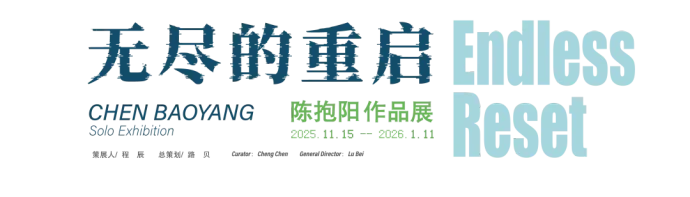
壹美美术馆荣幸地宣布,“无尽的重启——陈抱阳作品展”将于2025年11月15日正式开展,开幕式于11月22日举办。作为壹美美术馆“青年艺术家计划”的项目,本次展览由北京实创科技园开发建设股份有限公司主办,壹美美术馆承办,程辰担任策展人,通过呈现青年艺术家的生命体验及媒介表达,洞见当代青年艺术生态。
展览展期至2026年1月11日,在壹美美术馆一层集中呈现艺术家陈抱阳的6件数字装置作品和部分架上作品。他用作品构建起数字时代的艺术叙事,同时把目光投向存在、认知与技术本质这些核心问题。“无尽的重启”,是传统艺术到数字时代艺术发展的一个隐喻。艺术的前进需要一次次细微而未知的重启,在继承中突破,在矛盾中前行,在探索中重构,尝试锚定自我、艺术与世界的关系,这是艺术家追随时代的自觉更新。
与此同时,壹美美术馆二层,“暖——徐紫迪作品展”同期开展。“无尽的重启”和“暖”并置在美术馆中,将人工智能与古典媒介艺术共同展现在观众面前。它们没有新旧之分,有的只是艺术家在世界的此刻决定关注的焦点。在历史里寻找斑斓,抑或在未来中尝试呼吸,都是关于艺术的一场又一场复兴。
————
无尽的重启——谈陈抱阳的创作
程 辰
我们正在经历一个艺术语言与认知边界被彻底重构的时代。人工智能加速进入艺术领域,实在地影响着艺术家的构思和工作方法。技术不再是艺术的附加工具,而是开始从内部推动观念更新和形式变化。时代为艺术家带来更大的表达空间,也催生出关于传统与现代、真实与虚拟、人类与机器关系的深层困惑。对此,青年艺术家陈抱阳选择直面变化:他的创作从传统山水的数字化重构,到人机关系的哲学探索,再到多智能体生态的构建,每一次创作都是对艺术表达的“重启”。在日常语境中,我们习惯在电脑出故障时通过重启来恢复系统,或在完成软硬件更新后重启以应用变更、优化性能、清理缓存。诚然,我们渴望借助技术和新观念推动艺术进步,但这种重启也暗藏悖论。因为它可能带来修复与提升,可能暴露新的未知与不确定,也可能出现随之而来的无限循环。
陈抱阳的实践,正面回应并尝试化解这个悖论。他在重启中构建起数字时代的艺术叙事,同时把目光投向存在、认知与技术本质这些核心问题。他出身于艺术世家,但却没有进行传统的美术学习与训练。如他所说,“......从记事起,世界对我还算友善。我的父母沉醉于中国古典山水的精神世界,而我却在与各种奇特、玄奥的电脑故障斗争中成长,立志成为一名工程师,消灭这个世界上的所有错误。”可见,他对艺术的兴趣来自家学中的传统滋养,而创作方法却由科技激活与塑型。对年轻的陈抱阳来说,这也是对“文化传承与创新”的下意识回应。传统给了他审美与气质,技术为他打开路径,两者共同推动他找到自己的表达。
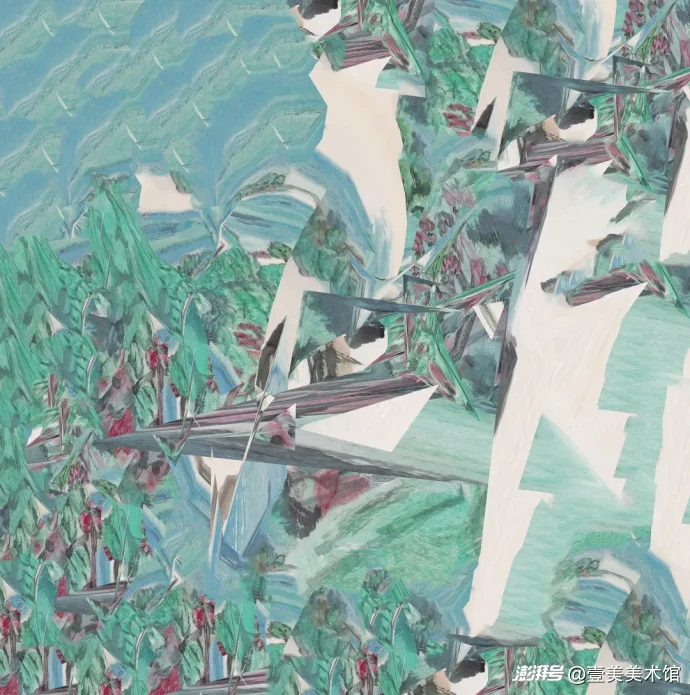
《重构山水》系列,《苏堤春晓》 人工智能算法生成、绢本喷墨,101×104cm,2014
2014年的《重构山水》是这一探索的起点,他将中国传统山水画经典导入自编AI模型,用机器学习提取笔法和构图规律,再由算法生成全新图像并打印在中国绢上。古人通过临摹来传承和学习,陈抱阳以算法替代人手,表面看,这是传统的延续,但本质上,这是一次彻底的重启。传统临摹追求对原作的忠实再现,AI生成却在规则框架内孕育无限变化。“确定性规则下的不确定性结果”正是对中国传统书画精神的领悟,也暗合了海德格尔《技术的追问》中关于“技术是存在之真理的显现”的论断,技术并非简单的唯一的工具,而是开启新认知维度的路径。传统山水的意境依赖画家主观情志,而《重构山水》中的“山水”被算法打散重组,像素层面的重构颠覆了传统格调,让熟悉的视觉元素脱离原有语境,这种“解构与重构”是传统文化更新中“陌生化”的过程。这种陌生化,让“传统如何在现代性中存在”成为一个可被观看的问题。陈抱阳最终还是选择绢本作为输出载体,绢本的经纬线纹理与数字像素网格形成微妙呼应,以传统材料的物质性为数字图像提供了落点,让这次重启免于沦为无本之木。由此可见,传统与现代并非对立,而是在相互对话中形成新的融合与共生。到2025年,这套创作逻辑仍在继续推进。算法已经能够在其总结的绘画基础上进行自我生成和演化,但这种科学技术的进步似乎在艺术作品中已经不那么重要了。

《仿生人会梦见电子奶牛吗》,公共装置 TX 淮海, 虚拟现实装置(虚拟现实、定制钢化玻璃、投影),上海,2019
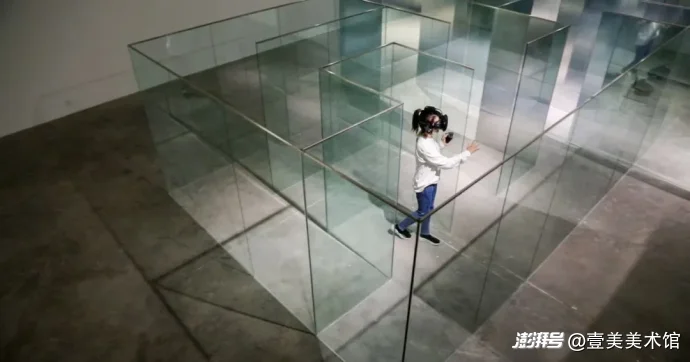
杨画廊,北京《仿生人会梦见电子奶牛吗》同名个展,2017
随着创作推进,陈抱阳将“重启”拓展到感知边界与人机关系。他开始深入触碰“认知真实性”与“存在本质”的问题。2017年的《仿生人会梦见电子奶牛吗?》把钢化玻璃迷宫与虚拟现实放在同一现场。观众在VR中获得虚拟自由,却被现实中的玻璃墙阻挡行动,视觉与触觉的错位唤醒身体对“真实”的感知。这是对“感知真实性”的一次重启。传统艺术用再现来构建体验,而陈抱阳以技术制造感知悖论,这一设置把“何为真实”放回到观看者自己的经验里。从哲学层面看,这一作品直指笛卡尔“我思故我在”的认知起点。当视觉(理性认知)与触觉(身体感知)产生冲突时,“真实”的定义开始动摇,而身体感知的不可欺骗性,成为存在的基石。正如陈抱阳在画册中所言“眼睛可能会欺骗我们,但身体永远诚实”,这与现象学中“身体是认知主体”的观点相合。感知并非单纯的感官接收,而是身体与世界互动的整体体验,VR与玻璃迷宫的冲突,恰恰让这种“身体认知”被看见。

艺术家工作桌装置

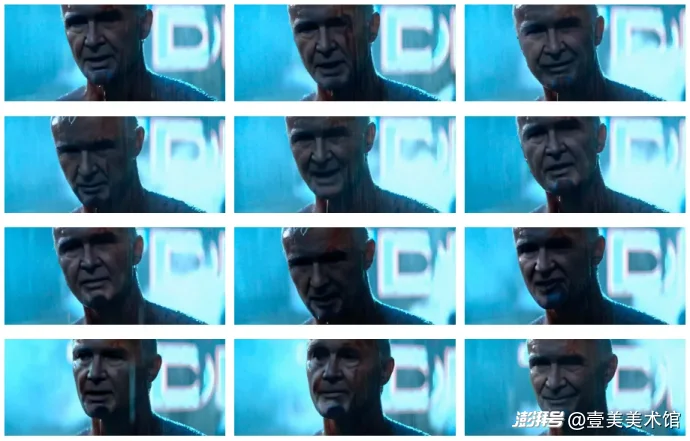
《我在雨中见过你哭泣》,人工智能生成视频(换脸),2019
2019年,AI换脸技术还不成熟,陈抱阳开始了艰难的技术探索。他的作品《我在雨中见过你哭泣》将哈里森・福特的苍老面孔与《银翼杀手》中罗伊・巴蒂的独白场景合成,打破演员与角色、过去与现在的界限。这是一次对“身份与记忆”的重启。技术提供了新表达手段,也让真实与虚构的边界变得模糊。进步与困惑并行,重启的核心悖论由此出现。从哲学视角看,作品指向“身份的不确定性”与“记忆的建构性”。剧中复制人罗伊・巴蒂的临终独白“所有这些时刻都将消失在时间的长河里”,本就触及存在的短暂。陈抱阳用深度伪造让“年老的福特”演绎“年轻的复制人”,进一步消解了“真实自我”的固定形象。正如德里达“延异”理论所揭示的,身份并非稳定的本质,而是在差异与延宕中建构的意义。这种不确定性的呈现,对应着数字时代的“自我认知”压力。重启的意义,便在于在这种不确定性中,一次又一次追问,“我”究竟是什么?
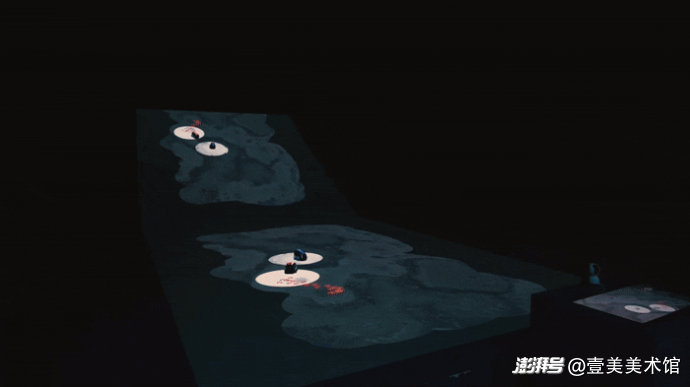
《追逐迷雾》,人工智能小车装置 (自动驾驶模型车x2、投影、交互台),2019
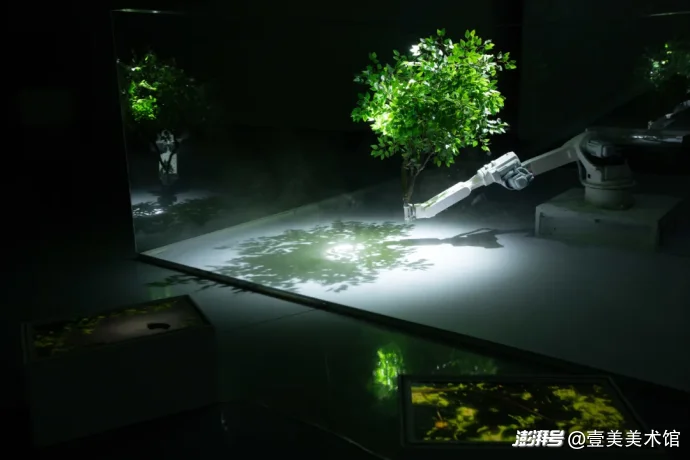
《第一森林定律》,多智能体 AI 装置 (机械臂、烟雾、灯光、屏幕、投影),2021
2020年以来,陈抱阳的创作进入多智能体共生阶段,实现了对艺术生态的重启。他从单一技术实验转向复杂系统的搭建,这一转变背后是对“生态共生”与“技术伦理”的哲学思考。《追逐迷雾》中,两辆AI驱动的汽车在“战争迷雾”里相互追逐,观众通过交互台放置虚拟障碍物影响智能体行为。作品不再是艺术家单向输出,而是多主体互动演化的动态系统。这种互动创作模式,打破了传统创作中的单向传递,在互动中生成了意义网络,重启在此成为“打破艺术创作的主体垄断”的手段,让艺术从“艺术家的个人表达”走向“多主体的共生叙事”。《第一森林定律》的指向更为尖锐。AI系统控制机械臂为植物提供“完美生长环境”,却因故意设置的“错误参数”,导致机械臂频繁升降树木,最终至其死亡。这是对“技术救世论”的重启。作品打破“技术能解决一切矛盾”的想法,因为当技术脱离对自然本质的理解,即便初衷向好也可能引发灾难。这是陈抱阳对AI时代的怀疑和警醒。机械臂“好心办坏事”的现场,将问题具象化:若缺乏伦理和约束,缺乏对“存在本质”(如植物生长的自然规律)的尊重与敬畏,技术就可能成为破坏的力量。而重启的意义,正在于通过这种批判性反思,让技术服务于存在,而不是成为支配存在的工具。

《假蜃楼:神动迷踪》,多智能体模拟 (大语言模型、虚幻引擎、神话文本)、屏幕,2025

《假蜃楼:状态切片》,装置 大语言模型驱动的智能体(导航算法),光学装置、屏幕,2024
2023年开始,陈抱阳开启了“假蜃楼”系列创作:《假蜃楼与多智能体系统》《假蜃楼:意识欺骗》《假蜃楼:状态切片》。主题继续指向技术伦理,并将视野转向机器意识与未来生态,触及“机器是否具有意识”和“人类文明演化”的终极哲学问题。他让大语言模型驱动的智能体进入虚拟试炼场,在互动中测试欺骗与策略能力,挑战“机器只能被动执行指令”的固有认知。这一作品本质上是对图灵测试的艺术重构。图灵测试以“能否模仿人类对话”判断机器智能,陈抱阳则进一步追问“机器能否具备类似人类的策略性与欺骗性?”。问题延伸到了“意识本质”,如果机器能自主制定策略、实施欺骗,是否意味着其拥有了初步的“意识”?在此基础上,他提出新的疑问“机器会想象吗?”尽管许煜已经论证过想象力从根本上来说是人工的,机器也能主动地参与想象力的认知过程,但在陈抱阳的创作现场,重启是拓展意识认知边界的途径和方法,也让艺术成为探索机器意识的试验场。

《智能体共生》,装置,大语言模型驱动的多智能体(四足机器人,机械臂,特制屏幕,镜面),实时演算,尺寸可变,2024
《智能体共生》以星际移民为背景,结合机械臂、四足机器人与光学装置,探讨人类与AI的未来共生,将重启从当下延伸至对文明演化的想象。从哲学层面看,作品回应海德格尔的观点“技术是命运”。技术与人类并非对立关系,而是共同演化的命运共同体。作品中的“机器人在破碎镜面上行走”是一种隐喻,镜面的破碎象征自然与技术的脆弱平衡,而机器人的行走则代表着人类与AI在这种平衡中寻找共生路径的努力。按照刘易斯·芒福德《技术与文明》中的理论,调整技术体系的下一步就在于,把它和我们已经开始发展的新文化以及地域新模式、社会新模式、个人新模式协调统一起来。如果认为所有由技术造成的问题都应当在技术领域的范围之内寻找答案,那么这种想法就大错特错了。陈抱阳在此选择用艺术的方法寻找解决方案,把重启转化为“对文明未来的主动建构”。不是被动接受技术带来的变化,而是在艺术实践中探寻人与技术的共生可能,为文明演化提供新的想象空间。
陈抱阳认为当今的AI已经在艺术创作中展现出独特的作者身份。对他来说,AI不再只是一种工具或媒介,更是可信赖的创作伙伴。由于编程本身的不确定性,AI有时会在错误或混乱中引入意想不到的新视角和表现形式,激发出一种近似无意识的创造力。这种“黑盒”效应不再是简单的二元对应,而是在算法不断变化中生成更多可能。他把这一过程称为“不可能的尽兴”。这种不尽兴,正是重启的理由和必要,因为只有不断重启,这种即使尽兴了也未可知的成果才能闪现。这种“重启”不是简单的重复或否定,而是持续的自我探索和思考。新媒体技术只是一个抓手和切口而已。

《星尘愚公》,装置,大语言模型驱动的智能体 (人形机器人、机械臂)、投影,尺寸可变,2025
行文至此,我们可以用“重启”来总结陈抱阳十年来的创作。首先,重启是对“存在维度的拓展”。艺术不只再现现实,还通过技术与理念的迭代,打开对存在本质、认知边界与文明未来的新探索。陈抱阳的作品从传统山水走向机器意识,每一次重启都让艺术触及更广阔的存在维度。其次,重启是对“矛盾的辩证超越”。创作中的悖论(如技术进步与伦理风险、创新与传统的平衡)并非阻碍,而是艺术表达的核心,重启的过程就是在矛盾中实现辩证统一的过程。陈抱阳在作品中不回避技术的双重性,将其转化为思辨张力,让艺术成为连接技术与人文的桥梁,这恰是黑格尔“正反合”辩证法在艺术创作中的体现。最后,重启是对“艺术本质的回归”。艺术的本质是对世界的追问与表达,而数字时代的技术变革,让这种追问与表达面临新的挑战。重启意味着艺术家主动适应时代变化,以新的媒介与语言继续发问,使艺术保持对存在的敏感与深思。
“无尽的重启”,是传统艺术到数字时代艺术发展的一个隐喻。它源自文化与艺术发展中的突破与进步,绵延到现在的AI与生成。艺术的前进需要一次次细微而未知的重启,这是艺术家追随时代的自觉更新——在继承中突破,在矛盾中前行,在探索中重构,尝试锚定自我、艺术与世界的关系。这种重启没有起点,没有终点,甚至根本就没有方向和目标。它只有过程,只有对世界的探索、理解和表达,这就是个全力以赴走向无尽边际的过程,而这正是艺术的生命力所在,更是人的永恒价值。
Endless Reset
——A Brief Discussion On Chen Baoyang’s Artistic Practice
Cheng Chen
We are experiencing an era in which artistic language and the very boundaries of cognition are being thoroughly reconfigured. As artificial intelligence accelerates its entry into the realm of art, it tangibly influences artists’ thinking and practice. Technology is no longer merely an add-on tool for art, but a force that drives the renewal of concepts and the transformation of forms from within. This era offers artists expanded expressive possibilities, while also giving rise to profound confusion about tradition and modernity, reality and virtuality, human and machine. Confronted with these shifts, young artist Chen Baoyang has chosen to meet the change headon. His creative journey, from the digital reconstruction ofical landscapes, through philosophical explorations of humanmachine relations, to the construction of multiagent ecosystems, constitutes a series of “resets” of artistic expression. In everyday usage, we routinely reset computers to restore systems after a malfunction, or to apply updates, optimize performance, and clear caches following software or hardware upgrades. Indeed, we aspire to advance art through technology and new thinking, yet, this very act of resetting also conceals a paradox. For it may bring repair and enhancement, it may reveal new unknowns and uncertainties, and it may also give rise to an ensuing cycle without end.
Chen Baoyang’s practice confronts and resolves this paradox. Through resetting, he builds artistic narratives for the digital age, while turning his gaze toward fundamental questions of existence, cognition, and the nature of technology. Born into a family of artists, he did not, however, receive a conventional art education. As he recalls, “From childhood, the world treated me kindly. My parents were immersed in the spiritual world ofical Chinese landscapes, while I grew up wrestling with strange, elusive computer malfunctions, determined to become an engineer and rid the world of all errors.” Thus, his interest in art was nurtured by family tradition, while his creative method was activated and shaped by technology. For the young Chen Baoyang, this was also an instinctive response to the dynamic of “cultural inheritance and innovation.” Tradition endowed him with aesthetic sensibility and temperament, whereas technology opened a path forward. Together, they enabled him to find his own voice.
De Shanshui (2014) marks the starting point of this exploration. He fed canonical works ofical Chinese landscape painting into a self-designed AI model, using machine learning to extract brushwork and compositional principles, then employed algorithms to generate new images, which were printed on traditional Chinese silk. While ancient artists learned and perpetuated tradition through copying, Chen Baoyang replaced the human hand with code. Superficially, this appears as a continuation of tradition, yet in essence, it is a thoroughgoing reset. Traditional copying aims at faithful reproduction, AI generation, by contrast, gives rise to limitless variation within a rule-based framework. “Uncertain outcomes derived from deterministic rules” reflect an understanding of the spirit of Chinese painting and calligraphy, resonating with Heidegger’s proposition in The Question Concerning Technology that “technology is a way of revealing.” Technology is not merely an instrumental tool, but a pathway to new dimensions of cognition. The artistic conception ofical landscapes relied on the painter’s subjective sensibility, while the “landscape” in Reconstructed Landscape is disassembled and reconfigured at the pixel level, subverting traditional composition and estranging familiar visual elements from their original context. This “deconstruction and reconstruction” is a process of defamiliarization in the renewal of traditional culture, one that renders visible the question of how tradition can persist within modernity. Chen Baoyang’s choice of silk as the output medium is deliberate: the texture of its warp and weft subtly echoes the digital pixel grid, grounding the digital image in materiality and ensuring that this reset does not become rootless. Here we see that tradition and modernity are not opposed, but enter into dialogue, giving rise to new forms of integration and symbiosis. By 2025, this logic had evolved further: algorithms became capable of self-generation and evolution based on learned painting principles, yet, such technical progress no longer seemed central to the artistic statement.
As his practice developed, Chen Baoyang expanded the notion of “reset” to the boundaries of perception and human–machine relations. He began probing core questions of “cognitive authenticity” and the “nature of being.” Do Androids Dream of Electric Cows? (2017) brought together a tempered-glass maze and a virtual reality environment in the same space. Viewers experienced virtual freedom in VR, yet found their movement blocked by physical glass walls. This disjunction between vision and touch awakened a bodily awareness of the “real.” It was a reset of “perceptual authenticity.” Where traditional art builds experience through representation, Chen Baoyang used technology to create a perceptual paradox, placing the question of “what is real” back into the viewer’s own experience. Philosophically, the work points to the Cartesian starting point of “I think, therefore I am.” When vision (rational cognition) conflicts with touch (bodily sensation), the definition of reality becomes unstable, and the undeniable presence of bodily feeling becomes the anchor of existence. As Chen Baoyang notes in the catalogue, “Our eyes may deceive us, but the body remains honest”, which aligning with the phenomenological view that the body is the locus of cognition. Perception is not mere sensory reception, but an integrated experience of the body interacting with the world. The clash between VR and the glass maze makes this “bodily knowing” visible.
In 2019, as face-swapping technology was still nascent, Chen Baoyang embarked on a challenging technical exploration. His workI’ve Seen You Cry in the Rain composited the aged face of Harrison Ford with the monologue scene of Roy Batty from Blade Runner, blurring the boundaries between actor and character, past and present. It was a reset of “identity and memory.” Technology provided new means of expression, but also blurred the line between truth and fiction. Progress and perplexity advanced together, revealing the central paradox of resetting. Philosophically, the work addresses the “instability ofentity” and the “constructed nature of memory.” Roy Batty’s final soliloquy—“All those moments will be lost in time, like tears in rain”—already touches on the transience of being. By using deepfake to show “an elderly Ford” portraying “a young replicant,” Chen further dissolves the fixed notion of an “authentic self.” As Derrida’s concept of différance suggests,entity is not a stable essence, but a meaning constructed through continuous difference and deferral. This presentation of uncertainty mirrors the pressure of “self-cognition” in the digital age. The significance of resetting lies in repeatedly asking, amid such uncertainty: What, after all, am I?
Since 2020, Chen Baoyang’s work has entered a phase of multi-agent symbiosis, realizing a reset of the artistic ecosystem itself. Shifting from singular technical experiments to the construction of complex systems, this shift reflects philosophical reflection on “ecological symbiosis” and “technology ethics.” In Chasing the Mist, two AI-driven cars pursue each other through a “war fog,” while viewers place virtual obstacles via an interactive console, influencing the agents’ behavior. The work is no longer a one-way transmission from the artist, but a dynamic system of multi-agent interaction and evolution. This interactive creative mode breaks with the unilateral authority of traditional creation, generating a network of meaning through participation. Here, resetting becomes a means of “breaking the monopoly of the artistic subject,” allowing art to shift from “personal expression” towards “polyphonic narrative symbiosis”. Forest Theorem One strikes a sharper critical note. An AI system controls a robotic arm that provides plants with a “perfect growth environment”, yet due to deliberately set “faulty parameters,” the robot arm repeatedly lifts and drops a tree, eventually killing it. This is a reset of “techno-utopianism”. The work dismantles the belief that “technology can resolve all contradictions,” revealing how technology, when divorced from an understanding of natural essence, can lead to disaster despite good intentions. Chen Baoyang’s skepticism and warning for the AI age are made concrete in the scene of the robot arm “failing in spite of good intentions”: without ethics, restraint, and reverence for the “nature of being” (such as the natural laws of plant growth), technology can become a destructive force. The value of resetting lies precisely in such critical reflection, redirecting technology to serve existence, instead of dominating it.
Beginning in 2023, Chen Baoyang launched the Alt-Mirage series: Alt-Mirage and Multi-Agent System, Alt-Mirage: Consciousness Deception, and Alt-Mirage: State Slice. The works continue to engage with technology ethics while shifting focus to machine consciousness and future ecologies, touching on ultimate philosophical questions such as “Can machines possess consciousness?” and “How will human civilization evolve?” He placed large-language-model-driven agents into virtual testing grounds, examining their capacity for deception and strategy through interaction, thereby challenging the ingrained belief that “machines can only passively execute commands”. Essentially, this body of work represents an artistic reconfiguration of the Turing test. While the Turing test judges machine intelligence by its ability to mimic human conversation, Chen Baoyang pushes further with a question “Can machines develop human-like strategic and deceptive behaviors?”. The inquiry extends to the “nature of consciousness”, if a machine can autonomously devise strategies and practice deception, does that suggest a preliminary form of “consciousness”? Building on this, he raises a new question: “Can machines imagine”? Although Yuk Hui has demonstrated that imagination is fundamentally artificial and that machines can actively participate in the cognitive process of imagination, within Chen Baoyang’s creative practice, resetting serves as a pathway and a method to expand the boundaries of conscious cognition, turning art into a testing ground for exploring machine awareness.
Symbiosis of Agents, set against the backdrop of interstellar migration, combines robotic arms, quadruped robots, and optical installations to explore future coexistence between humans and AI, extending the notion of reset from the present towards imaginaries of civilizational evolution. Philosophically, the work responds to Heidegger’s view that “technology is our destiny”. Technology and humanity are not opposed but form a co-evolutionary community of fate. The image of a “robot walking on broken mirrors” serves as a subtle metaphor: the shattered surface symbolizes the fragile balance between nature and technology, while the robot’s movement represents the effort to find a path of symbiosis between humans and AI within that balance. In line with Lewis Mumford’s theory in Technics and Civilization, the next step in reorienting the technological system lies in harmonizing it with the new culture we have begun to develop, new patterns of region, society, and personhood. It would be a grave mistake to assume that all problems created by technology must be solved within the domain of technology alone. Here, Chen Baoyang chooses an artistic approach to seek solutions, transforming reset into an “active construction of civilizational futures”. Rather than passively accepting technological change, he explores possibilities for human–technology symbiosis through artistic practice, opening new imaginative horizons for cultural evolution.
Chen Baoyang believes that today’s AI already demonstrates a distinctive authorial presence in artistic creation. For him, AI is no longer just a tool or medium, but a credible creative partner. Due to the inherent unpredictability of programming, AI can sometimes introduce unexpected perspectives and forms through errors or chaos, sparking a creativity akin to the unconscious. This “black box” effect is no longer a simple binary correspondence, but a generative process where evolving algorithms produce ever more possibilities. He calls this process “the impossibility of total fulfillment.” This very incompleteness is the reason and necessity for resetting, because only through continuous resetting can those outcomes, whose fulfillment remains uncertain, occasionally flash into being. This “reset” is not simple repetition or negation, but a persistent self-exploration and reflection. New media technologies are merely a point of entry.
We may now use “reset” to understand Chen Baoyang’s practice over the past decade. At first, resetting is an “expansion of existential dimensions.” Art does not merely represent reality, through technological and conceptual iteration, it opens new explorations into the nature of being, the boundaries of cognition, and the future of civilization. Chen’s works, moving fromical landscapes to machine consciousness, extend art’s reach into broader dimensions of existence with each reset. Secondly, resetting is a “dialectical transcendence of contradiction.” The paradoxes in his work, such as technological progress and ethical risk, or the balance between innovation and tradition, are not obstacles, but central to artistic expression. The process of resetting is a process of achieving dialectical unity amid contradiction. Chen does not evade the dual nature of technology, but transforms it into speculative tension, making art a bridge between technology and the humanities, embodying the Hegel dialectic of “thesis, antithesis, synthesis” in artistic practice. Finally, resetting is a “return to the essence of art”. The essence of art lies in questioning and expressing the world, and technological transformation in the digital age presents new challenges to this endeavor. Resetting signifies the artist’s active adaptation to contemporary change, continuing to pose questions through new media and languages, keeping art acutely perceptive and deeply reflective toward existence.
“Endless reset” is a subtle metaphor for the evolution of art from traditional forms to the digital age. It originates in the breakthroughs and progress of cultural and artistic development, extending now into AI and generative art. Art’s advance requires countless subtle, uncertain resets, a conscious renewal by the artist in step with the times: breaking through within inheritance, moving forward amid contradiction, reconstructing through exploration, attempting to anchor the relationship between self, art, and the world. This reset has no starting point, no end point, not even a definite direction or goal. There is only the process: the exploration, understanding, and expression of the world. It is a wholehearted journey towards boundless horizons. And this is the vitality of art, indeed, the enduring value of being human.
展览信息 ABOUT EXHIBITION
策展人:程 辰
Curator: Cheng Chen
展览时间:2025年11月15日-2026年1月11日
Exhibition Date: 2025.11.15-2026.1.11

陈抱阳
艺术家、策展人、青年学者,拥有哥伦比亚大学和纽约视觉艺术学院双硕士学位。任教于中央美术学院实验艺术与科技艺术学院。
作为科技艺术领域的先锋实践者,他的创作广泛运用人工智能技术、机器人技术和生物技术等前沿媒介,话题涉及机器意识、人机共生、科技伦理等社会议题。
现专注于多智能体的涌现行为与互动研究,相关学术论文发表于CSSCI、CCF 等国内外重要期刊,并主笔《中国人工智能——AI+ART》白皮书。
其作品曾在中国及国际多个重要美术馆和艺术机构展出,曾荣获保时捷青年艺术家奖,现代汽车BLUEPRIZE策展奖,以及奥普来数字艺术奖等。并连续六年担任亚洲数字艺术展策展人。
————
主办单位:北京实创科技园开发建设股份有限公司
承办单位:北京市海淀区壹美美术馆
支持单位:中共北京市海淀区委宣传部、北京市海淀区文化和旅游局、北京市海淀区民政局
协办单位:北京中关村永丰产业基地发展股份有限公司、北京实创亿达科技服务有限公司、北京仲量联行物业管理服务有限公司
设备支持:索诺克(北京)科技有限公司、北京唐影众线文化传播有限责任公司
执行团队
总策划:路贝
展览统筹:杨茹
展览执行:张翰涛
展览设计:林佳璇
活动策划:胡彤彤
媒体宣传:林妍
视频制作:罗玉萌
免费观展
开馆时间:10:00 - 17:00(每周一闭馆)
END
-One Art Museum-
壹美美术馆官方微信出品
编辑:林妍
校对:胡彤彤 张翰涛
海报:林佳璇
视频:罗玉萌
审核:杨茹

本文为澎湃号作者或机构在澎湃新闻上传并发布,仅代表该作者或机构观点,不代表澎湃新闻的观点或立场,澎湃新闻仅提供信息发布平台。申请澎湃号请用电脑访问http://renzheng.thepaper.cn。







- 报料热线: 021-962866
- 报料邮箱: news@thepaper.cn
互联网新闻信息服务许可证:31120170006
增值电信业务经营许可证:沪B2-2017116
© 2014-2026 上海东方报业有限公司