
- +1
深圳高校国际合作之路越走越实
如果您现在到
深圳高校的校园里走一走
会发现不同肤色的面孔
越来越多
短期访学、交换项目、合作办学
……
国际师生往来日渐频密
与此同时
深圳高校的国际化
也正在悄然越过
“迎来送往”的阶段
从师资引进到课程共建
从联合培养到质量认证
国际化的重心
正从人员的频繁往来
沉淀为师资、
课程与培养体系中的
共同经验
厚植师资基础
提升国际化的承接力
一所高校能否真正与国际学术平台对话,要看站在讲台上的人从哪里来。
今年是深圳北理莫斯科大学设立十周年,学校创新实施“莫大选派+北理工选派+全球选聘”的中俄联合引才模式,目前全职专任教学科研人员达579人,70%拥有副高及以上职称;累计吸纳20个国家的高水平人才加盟,组建14支中外院士牵头的跨国籍、跨学科联合科研团队,培育8个广东省高校科技创新团队。这些数字的背后是一种结构性的变化:国际化师资不再是个别院系的“点缀”,而是以院士领航、骨干支撑、青年拔尖的梯队形态,嵌入学校科研攻关与人才培养流程。
2026年1月27日,国家重点研发计划“中俄人工智能算法及其应用联合实验室”在深北莫启动,俄方联合负责人来自莫斯科国立大学和俄罗斯科学院索伯列夫研究所。到2026年秋季,深北莫与110多家中俄机构建立产学研合作关系,共建校企联合实验室6个、合作研究中心1个;俄方选派教职工282人,中俄学生在同一间实验室里并肩操作仪器、用双语讨论课题,已经成为日常场景。
深北莫的十年实践提供了一个观察样本,2026年全球前2%顶尖科学家榜单则更能说明国际化师资的厚度。今年,深圳大学309名学者入选全球前2%顶尖科学家;南方科技大学138人入选“终身科学影响力榜单”,242人入选“年度科学影响力榜单”;香港中文大学(深圳)共计151人次入选;深圳技术大学24位学者入选。
雄厚的师资力量,正是深圳高校吸引国际人才的底气所在。而国际化师资的“家底”,也为知识生产的国际合作提供了更多可能——它让深圳高校的国际交流不再停留于人员互访,而是深入到联合研究、协同攻关的实质层面,在共同解决真问题的过程中,把国际化做深做实。
学生双向流动
激活国际化的生命力
师资的厚度需要有人来承接,而学生交流的深度与结构,恰恰能检验这种承接是否有效。
香港中文大学(深圳)2026年共招收407名交换生,秋季学期270名交换生中本科生215人、研究生55人。截至目前,来自45个国家的上千名国际本科生在该校就读,占全校本科生总人数的14%。曾效力意大利斯帕尔足球俱乐部青年队、参加过意丙联赛的荷兰新生Lode,选择了人文社科学院的国际组织与全球治理专业。他提到深圳已成长为亚太地区的创新之都、今年又将主办APEC会议,“选择来到这座城市开启大学生活,一切都恰逢其时。”
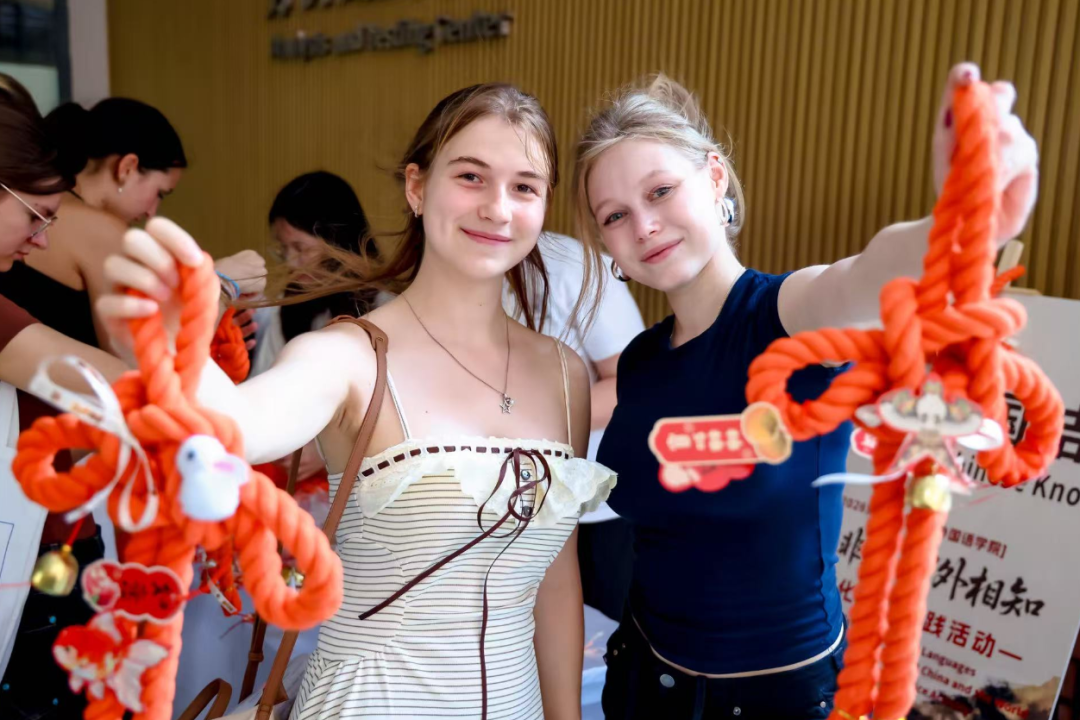
近日,香港中文大学(深圳)为国际交换生举办了一场年味浓郁的中国非遗文化体验活动。受访单位供图
与“迎进来”相对应,深北莫展示了另一种流动形态。该校累计选派1900余名学生赴俄罗斯、德国、意大利等国访学研修,中外学子组队参与国际顶级科创赛事,斩获中国国际大学生创新大赛、美国大学生数学建模竞赛等国际级奖项60余项。走出去与迎进来同时发生,学生的国际经验才不是单向度的“镀金”,而是双向的“对话”。
输出课程标准
扩大国际化的影响力
师资与人才的流动解决了“谁在教、谁在学”的问题,课程能否被外部世界采用,检验着一所高校的知识生产是否具备可迁移的优势。
深圳职业技术大学的实践提供了职业教育维度的答案:搭建“中文+技能”培育体系,培养海外高技能人才4000余人;建设“华为AI处理器应用开发”等40门国际在线课程,上线联合国教科文组织职业技术教育数字化教席、华为人才在线等官网,被36个国家和地区院校、企业使用;牵头编制《职业教育学习成果国际互认方案》,覆盖工业机器人系统集成与应用等30多个重点领域。
不仅如此,在泰国“深圳数字工坊”,深职大与比亚迪等企业深度合作,开发覆盖新能源汽车核心技术的英文版课程、教材及实训装备,面向全泰教师开展师资培训,泰国教育部专门致函感谢。5门全英文VR实训课程、1200项英文版教学资源推广至150多个国家;与华为联合建设的7门新一代信息技术智慧课程在巴塞罗那世界移动通信大会上发布,被200多所院校采用,通过海外2300多家华为ICT学院惠及110多个国家和地区的学习者。
课程出海的意义不在于多几门英文课,而在于中国技术标准与教学资源开始嵌入海外产业现场——国际化从“我学你”变成了“我们一起建”。
从人员往来的频密,走向师资结构的多元;从项目合作的铺开,走向课程与标准的输出;从单向的迎来送往,走向双向的协同共生……深圳高校不再只是国际交流的参与者,而开始参与到全球学术分工与人才塑造之中。
Shenzhen universities build lasting global ties beyond exchange
■ Jiao Ziyu, Shenzhen Special Zone Daily
Walk across a Shenzhen university campus and you are increasingly likely to meet students and faculty from abroad. But internationalization now goes beyond exchange visits and short-term programs: Universities are hiring international faculty, developing courses with overseas partners and building joint research and training programs.
The shift is from the movement of people to lasting changes in faculty, curricula and academic programs.
Shenzhen MSU-BIT University, marking its 10th anniversary this year, has a joint faculty recruitment model with Moscow State University and Beijing Institute of Technology. Faculty are selected by the founding universities or recruited internationally.
The university has 579 full-time faculty members and researchers, 70% of whom hold the title of associate professor or higher. Its staff includes scholars from 20 countries. The university has formed 14 interdisciplinary research teams led by Chinese and foreign academicians and built eight provincial-level technology innovation teams.
This mix of senior scholars, established researchers and younger faculty is now embedded across its research and teaching programs, rather than limited to a few departments.
On Jan. 27, the university launched the Sino-Russian Joint Lab for AI Algorithms and Applications. Its Russian partners include Moscow State University and the Sobolev Institute of the Russian Academy of Sciences.
The university partners with more than 110 Chinese and Russian institutions, and has established six university-enterprise labs and a collaborative research center. Russia has sent 282 faculty and staff. Chinese and Russian students work side by side in the labs.
The 2026 global ranking of the world’s top 2% of scientists offers another measure of the depth of Shenzhen universities’ international faculty. Shenzhen University had 309 scholars listed. Southern University of Science and Technology had 138 on the career-long impact list and 242 on the single-year impact list. The Chinese University of Hong Kong, Shenzhen (CUHK-Shenzhen), had 151, and Shenzhen Technology University had 24.
A strong international faculty attracts talent and deepens research partnerships, moving universities beyond reciprocal visits toward joint research and problem-solving.
Student exchanges offer another gauge. CUHK-Shenzhen enrolled 407 exchange students in 2026. Of the 270 who arrived for the fall semester, 215 were undergraduates and 55 were graduate students. Over 1,000 international undergraduates from 45 countries study there, making up 14% of the undergraduate population.
Lode, a Dutch freshman who played for Italian soccer club SPAL and competed in Serie C, chose to study at the university. He said Shenzhen’s growth as an innovation hub and its role as this year’s APEC host city made it an appealing place to begin university.
Shenzhen MSU-BIT University has sent over 1,900 students to Russia, Germany and Italy for study and research. Its Chinese and international students have also competed together in science and innovation contests, winning more than 60 awards.
Local universities are also exporting curricula and standards, widening their reach. Shenzhen Polytechnic University has trained over 4,000 skilled workers overseas in programs combining Chinese language and technical skills. Its 40 online courses are offered through the UNESCO Chair in Digitalization of Technical and Vocational Education and Training and used in 36 countries and regions. The university led the drafting of an international framework for mutually recognizing vocational education outcomes across more than 30 fields.
With BYD, it developed English-language courses and textbooks on new-energy vehicle technology for Thailand and trained teachers there. Its five VR training courses and 1,200 English-language teaching resources have reached 150 countries. Seven smart courses on next-generation information technology, developed with Huawei, debuted at the Mobile World Congress in Barcelona. More than 200 institutions have adopted them, and Huawei ICT Academies offer them to learners in 110 countries and regions.
For Shenzhen universities, sharing courses and technical training abroad can bring Chinese teaching materials and standards into overseas classrooms and workplaces, expanding their role in global research and education beyond exchanges.
(Translated by Li Jing)
相关阅读
原标题:《深圳高校国际合作之路越走越实》
本文为澎湃号作者或机构在澎湃新闻上传并发布,仅代表该作者或机构观点,不代表澎湃新闻的观点或立场,澎湃新闻仅提供信息发布平台。申请澎湃号请用电脑访问http://renzheng.thepaper.cn。






- 报料热线: 021-962866
- 报料邮箱: news@thepaper.cn
互联网新闻信息服务许可证:31120170006
增值电信业务经营许可证:沪B2-2017116
© 2014-2026 上海东方报业有限公司